Skip to content
Webs 2 PDF Logo
  • Home
  • Benefits
  • Reviews
  • Pricing
  • FAQs
  • Blog
  • Contact
  • Home
  • Benefits
  • Reviews
  • Pricing
  • FAQs
  • Blog
  • Contact
sign in

Category: Website to PDF

  • January 13, 2026

Webpage to PDF Blank Page Issue: Causes, Fixes, and Solutions

Webpage to PDF Blank Page Issue

Converting a webpage to PDF is a common task for professionals, students, developers, and businesses. However, many users face a frustrating issue where the PDF file downloads successfully but opens as a blank page or contains missing content. This is known as the webpage to PDF blank page issue, and it usually occurs due to rendering, JavaScript, or loading problems.

In this detailed guide, we explain why blank PDFs happen, the most common causes, and step-by-step fixes to ensure your webpage converts into a complete, readable PDF.

What Is the Webpage to PDF Blank Page Issue?

This issue occurs when a PDF generator successfully creates a file, but the output results in:

  • A completely white or empty page.
  • Missing images or broken text blocks.
  • Layouts that look nothing like the original website.

This issue is common when converting dynamic webpages, JavaScript-based websites, or long scrolling pages using basic browser tools.

Primary Reasons Why Webpage to PDF Shows a Blank Page

1. JavaScript Content Not Rendering Properly

Modern websites rely heavily on JavaScript frameworks such as React, Angular, and Vue.

Why does this cause blank PDFs:

  • The PDF converter captures the webpage before JavaScript finishes loading
  • The HTML structure loads, but the actual content does not render

2. Lazy Loading Prevents Content from Appearing

Many websites use lazy loading to improve performance.

Problem:

  • Images and sections load only after scrolling
  • The PDF tool captures the page without triggering lazy loading

This results in missing images or completely blank PDF pages.

3. Browser Print to PDF Limitations

Using Chrome or a browser’s “Print to PDF” is a major reason for blank PDFs.

Limitations include:

  • Poor JavaScript support
  • Broken CSS layouts
  • Incomplete content capture

4. Blocked CSS, Fonts, or External Resources

Webpages depend on external files such as:

  • CSS stylesheets
  • Web fonts
  • CDN-hosted images

If these resources are blocked due to:

  • Ad blockers
  • Firewalls
  • CORS restrictions

The PDF may appear blank or improperly formatted.

5. Login-Protected or Session-Based Pages

Pages behind authentication often fail to convert.

Reasons:

  • The converter cannot access the logged-in session
  • The page loads in a restricted or empty state

Examples include dashboards, admin panels, and internal tools.

6. Slow Page Loading or Timeout Issues

Large webpages or API-driven pages may load slowly.

If the PDF tool captures the page too early:

  • Content does not appear
  • PDF output remains blank

Comparison: Browser Print vs. Professional PDF Tools

Feature Chrome/Browser Print Dedicated Tools (e.g., Webs2PDF)
JS Rendering Limited / Hit-or-Miss Full Engine Support
Lazy Loading Fails frequently Auto-scroll/Wait triggers
Layout Accuracy Low (often breaks) High (Pixel Perfect)
Customization Minimal High (Margins, Grayscale, JS delay)

Step-by-Step Fixes to Solve the Blank PDF Problem

1. Use a JavaScript-Enabled Converter

Switch from “Print to PDF” to a dedicated online tool like Webs2PDF. These tools use headless browsers that wait for JavaScript to execute before “printing” the page.

2. The “Pre-Scroll” Hack

Before you hit convert, manually scroll to the bottom of the page. This forces all lazy-loaded images to trigger and appear.

3. Disable Ad Blockers

Ad blockers can sometimes stop essential scripts or CSS files from loading, leading to a broken PDF layout. Turn them off for the specific site you are converting.

4. Check for CORS & Resource Blocks

Ensure that fonts and images aren’t being blocked by security headers (CORS). Using a professional API-based converter usually bypasses these local browser restrictions.

5. Increase “Wait Time” or Timeout

If you are using an advanced tool, set a rendering delay (e.g., 5 seconds). This gives the webpage enough time to fetch data from its database before the PDF is generated.

Webpages Most Affected by Blank PDF Issues

Blank PDF problems commonly occur with:

  • JavaScript-heavy websites
  • Infinite scroll pages
  • Web apps and dashboards
  • Login-protected pages
  • News and data-driven websites

Why a Dedicated Web page to PDF Tools works better

Unlike browser print options, professional webpage to PDF tools:

  • Render JavaScript correctly
  • Load external resources completely
  • Preserve layouts and images
  • Support long and dynamic webpages

This results in accurate, readable, and complete PDF files.

Webpage to PDF Blank Page Issue: Quick Checklist

Before converting, ensure:

  • Webpage is fully loaded
  • JavaScript content is visible
  • Images and fonts appear correctly
  • No blocking extensions are active
  • The page is publicly accessible

FAQs: Webpage to PDF Blank Page Problems

1. Why does my webpage convert to a PDF download but show a blank page?

This usually happens because the converter captures the HTML structure before the actual content (like images or data) has finished rendering. Common culprits include heavy JavaScript, slow API responses, or the website requiring a user login that the converter cannot access.

2. Why does Chrome’s “Print to PDF” often create blank pages?

Chrome’s built-in Print function is designed for static layouts. It often fails to trigger “Lazy Loading” (where images load as you scroll) and has limited wait times for dynamic JavaScript content, resulting in empty or partially rendered PDFs.

3. Can dynamic JavaScript webpages be converted to PDF without blank pages?

Yes, absolutely. To convert dynamic sites (like those built with React or Angular), you should use a dedicated JavaScript-enabled PDF converter. These tools use “Headless Browsers” that fully execute scripts and wait for the page to be “ready” before generating the PDF.

4. How do I fix missing images or content in my PDF?

To fix missing content:

  • Scroll through the entire page before converting to trigger lazy loading.
  • Disable Ad-blockers that might be stripping out CSS or images.
  • Check Media Queries: Ensure the site’s CSS doesn’t have @media print { … } rules that hide content.
  • Use a Professional Tool: Switch from basic browser printing to a robust online webpage-to-PDF service.

Conclusion

The webpage to PDF blank page issue is caused by rendering and loading limitations, not by the PDF file itself. Most blank PDFs occur due to JavaScript, lazy loading, browser print limitations, or blocked resources.

By using the right webpage to PDF conversion tool, ensuring full page load, and avoiding browser print for complex pages, you can consistently generate complete and accurate PDFs.
  • December 30, 2025

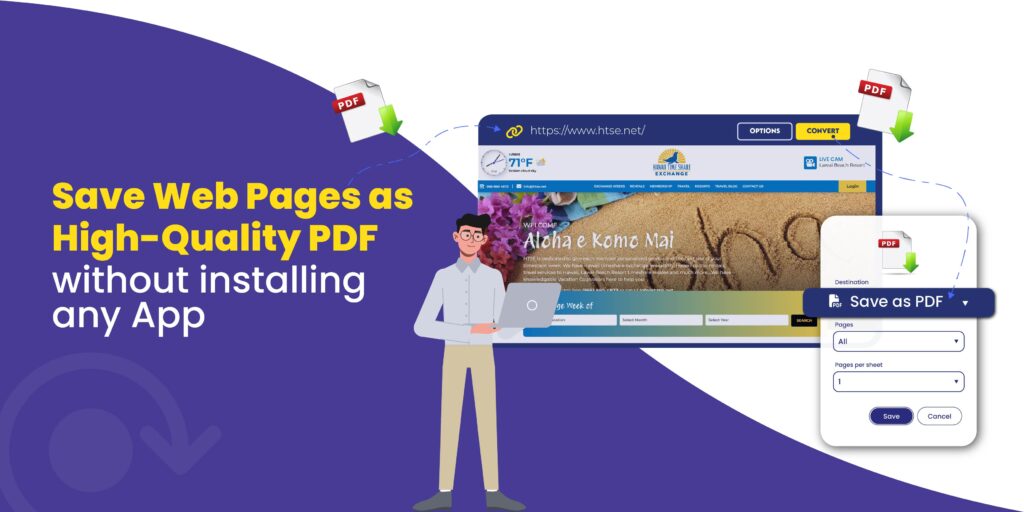
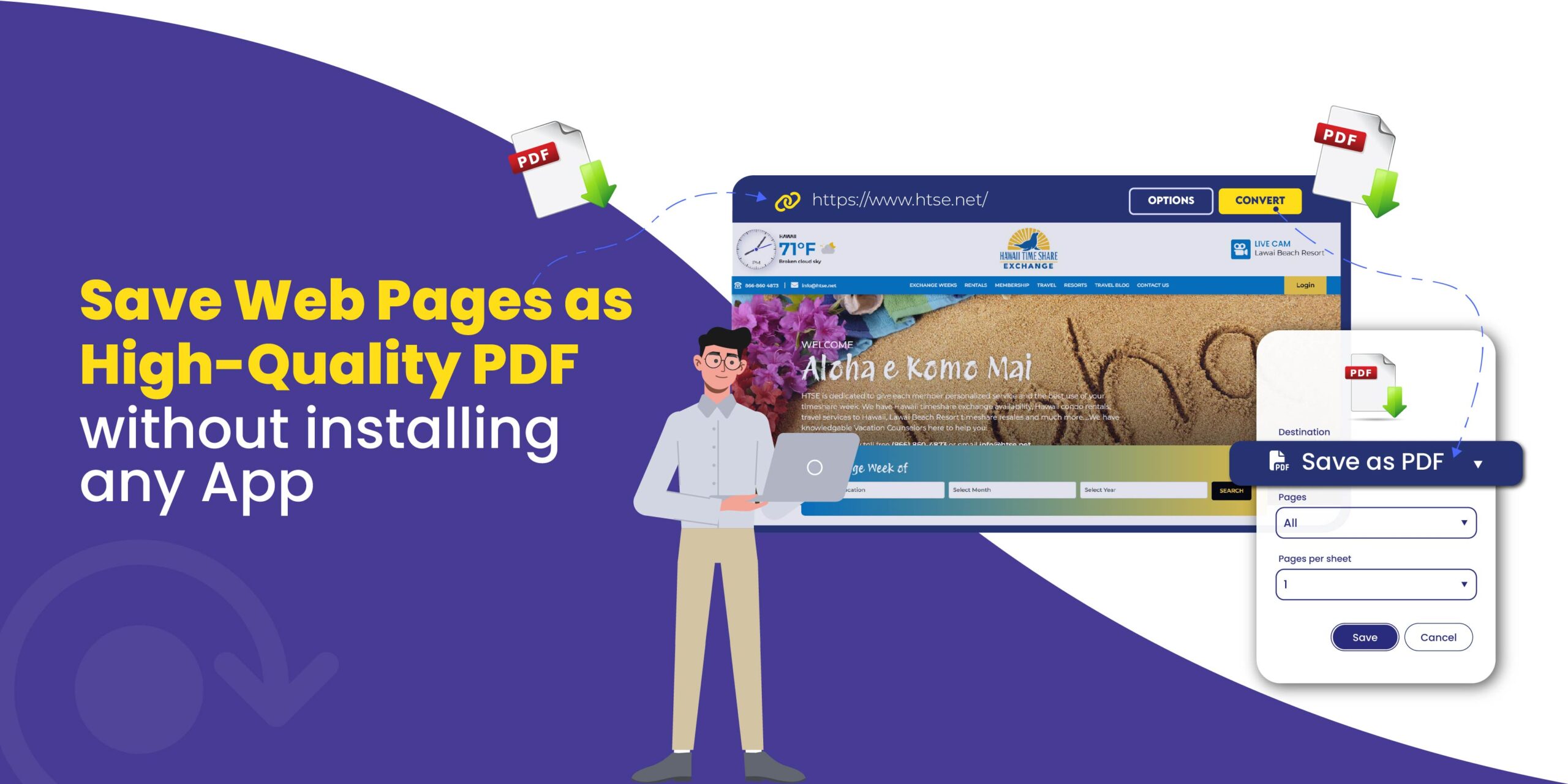
Save Web Pages as High-Quality PDF Without Installing Any App

Save Web Pages as High-Quality PDF

In today’s fast-paced digital world, saving web pages as high-quality PDFs has become essential for students, freelancers, researchers, and professionals alike. Whether it’s an article, tutorial, invoice, or online report, having a clean, print-ready PDF ensures your content remains accessible offline, easy to share, and professionally preserved. The best part? You can convert any webpage into a high-quality PDF online, without installing any software, app, or browser extension.

This guide will show you how to save webpages as PDFs, maintain layout and image quality, and choose the best online tools for converting HTML to PDF efficiently and securely.

Why Save Web Pages as PDF?

Converting webpages to PDF is not just convenient; it ensures your content is accurately preserved, accessible offline, and easy to share or print. Saving a webpage as a high-quality PDF is ideal for students, professionals, researchers, and businesses who want a clean, print-ready copy of online content.

Benefits of Saving Web Pages as PDF:

Preserves Layout & Design: PDF retains the exact formatting, fonts, images, tables, and colors, ensuring a high-quality, print-ready PDF even if the webpage changes later.

Offline Access Anytime: Read articles, tutorials, research papers, or documents without needing an internet connection, making your content portable and reliable.

Professional Documentation: Perfect for business reports, invoices, contracts, receipts, and research documents, keeping all details intact.

Easy to Share & Print: PDFs are universally supported on all devices, making it simple to share or print without formatting issues.

Common Challenges People Face While Converting Web Pages to PDF

While most modern browsers offer a “Print to PDF” option, this built-in method often falls short, especially when creating high-quality, print-ready PDFs. Users frequently encounter several issues:

Missing Images or Cropped Sections

Long webpages, infinite scroll pages, or content-heavy sites may get cut off, resulting in incomplete PDFs.

Dynamic Content Not Loading

JavaScript-heavy pages, animations, videos, or interactive elements often fail to render properly when using standard browser PDF tools.

Reduced Image and Text Quality

Browser-generated PDFs may compress images and reduce resolution, producing a lower-quality output.

Poor Formatting and Layout

Margins, spacing, tables, and multi-column layouts often break, making the PDF look unprofessional.

These challenges highlight the need for a reliable online PDF converter that can handle dynamic content, preserve layout, and generate high-quality PDFs from any webpage. Tools like Webs2PDF ensure your documents remain complete, accurate, and print-ready.

Best Online Tools to Convert Web Pages to High-Quality PDF

Converting webpages to high-quality PDFs requires the right tool, especially when dealing with long pages, dynamic content, or professional documents. Here are the top options:

1. Webs2PDF (Recommended)

Webs2PDF is a reliable online PDF converter that offers advanced features for both casual and professional users.

Key Features:

  • Fully online, no installation required, works in any browser.
  • Supports JavaScript-heavy or dynamic pages for accurate content rendering.
  • High-resolution PDF output ensures print-ready quality.
  • Customizable settings: adjust page size, margins, zoom, and orientation.
  • Add headers, footers, and watermarks for professional documentation.
  • Secure & privacy-focused: SSL encryption and automatic file deletion.
  • Ideal for long web pages, business reports, academic papers, and professional use.

2. Browser Extensions (Optional)

Full-page capture extensions for Chrome or Firefox can help save webpages as PDFs.

Features:

  • Capture long scrolling pages easily.
  • Annotation tools to add notes or highlights.
  • Some layout customization options.

Note: Browser extensions may slow down performance and require installation.

Step-by-Step Guide: How to Save Any Web Page as a High-Quality PDF (Online)

Saving a webpage as a high-quality PDF is easy when you follow the right steps. Using tools like Webs2PDF, you can convert webpages to PDF online without installing any software or browser extension.

Step 1: Open the Webpage

Ensure the entire page loads completely, including images, videos, and dynamic content, for a full capture.

Step 2: Copy the Page URL

Copy the full URL from your browser’s address bar. A complete URL ensures that all content is included in the PDF.

Step 3: Paste URL into Webs2PDF

Go to Webs2PDF.com and paste the copied URL into the input box. This tool supports both static and JavaScript-heavy pages.

Step 4: Customize Settings (Optional)

Page Settings:

  • Choose A4, Letter, or Custom size.
  • Select Portrait or Landscape orientation.
  • Adjust margins and zoom for a full-width capture.

Advanced Options:

  • Add headers, footers, page numbers, and titles.
  • Insert a watermark for branding or copyright.
  • Remove ads or pop-ups for a clean, professional PDF.

Step 5: Convert & Download

Click Convert, wait a few seconds, and download your high-resolution, print-ready PDF. Your PDF will maintain original formatting, layout, and image quality.

Tips for Creating High-Quality PDFs from Web Pages

To ensure your converted PDFs are professional, print-ready, and accurate, follow these simple tips when converting a webpage to PDF online:

Use Full-Page Capture Mode: Always enable full-page capture to ensure no content is cut off, especially for long or scrolling pages.

Remove Ads and Pop-Ups: Use reader mode or close banners and pop-ups before conversion. This results in a clean and professional PDF.

Maintain High Image Quality: Ensure all images and graphics on the webpage load in high resolution before converting. This preserves clarity in the final PDF.

Split Extremely Long Pages: For very long webpages, consider splitting content into sections. This improves readability, navigation, and professional presentation in the PDF.

Why Webs2PDF Is the Best Choice

When it comes to saving webpages as high-quality PDFs online, Webs2PDF stands out as the most reliable and user-friendly option. Here’s why professionals, students, and businesses choose it:

No Installation or Browser Extension Needed: Fully online, Webs2PDF works in any browser, making it quick and hassle-free.

Captures Complete Long Pages Without Cropping: Whether it’s a lengthy article, report, or dynamic webpage, Webs2PDF ensures every section is captured accurately.

Highest-Quality PDF Rendering: Get print-ready PDFs with preserved formatting, fonts, tables, and images.

Supports JavaScript and Dynamic Content: Handles interactive elements, animations, and scripts that standard browser PDF options often miss.

Secure and Privacy-Compliant: Files are encrypted with SSL and automatically deleted after conversion, keeping your data safe.

Ideal for Business, Research, and Academic Use: Perfect for professional documentation, research papers, invoices, or educational materials.

Custom Branding Options: Add headers, footers, and watermarks for professional presentation or copyright protection.

FAQs

1. How can I save a full webpage as a PDF without losing content?

Use a full-page online PDF converter like Webs2PDF, which supports long scrolling pages and preserves layout, images, and formatting.

2. Is it possible to save a webpage as PDF without installing an app?

Yes! All the tools mentioned in this guide work completely online, so you don’t need to install software or browser extensions.

3. Can I convert dynamic or JavaScript-heavy pages to PDF?

Absolutely. Webs2PDF can handle dynamic content, animations, and JavaScript elements, ensuring accurate PDF conversion. Embedded videos will appear as static images, but all other content is preserved in high-quality, print-ready PDFs.

Conclusion

Saving web pages as high-quality, print-ready PDFs has become essential for students, professionals, researchers, and businesses alike. Whether you need to archive content, create professional reports, or share information offline, using a reliable online PDF converter ensures your webpages are preserved accurately and completely.

With tools like Webs2PDF, you can convert any webpage, static or dynamic, into a clean, high-resolution PDF without installing software or browser extensions. This method keeps your content portable, professional, and easy to share across devices.

Take control of your digital content and start converting webpages to high-quality PDFs online today for seamless documentation and professional results.

  • December 23, 2025

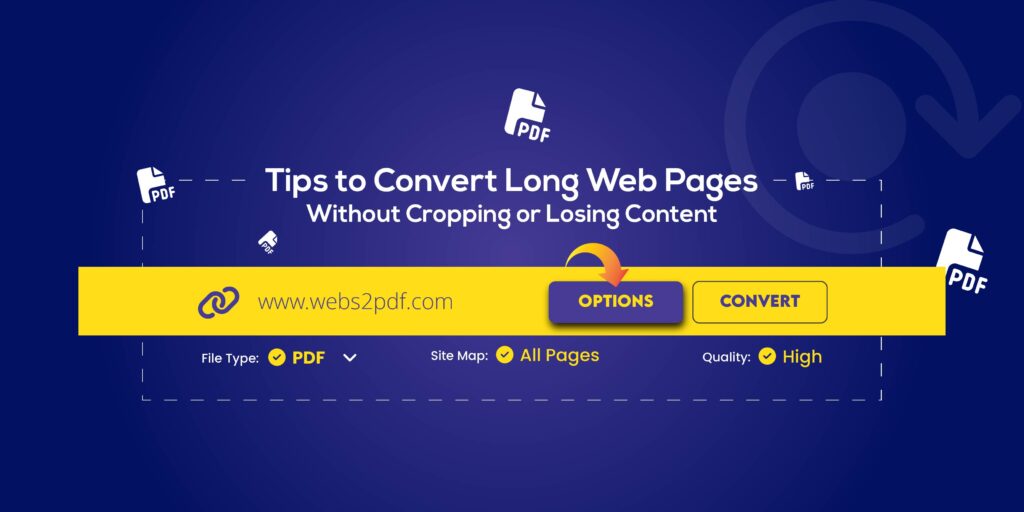
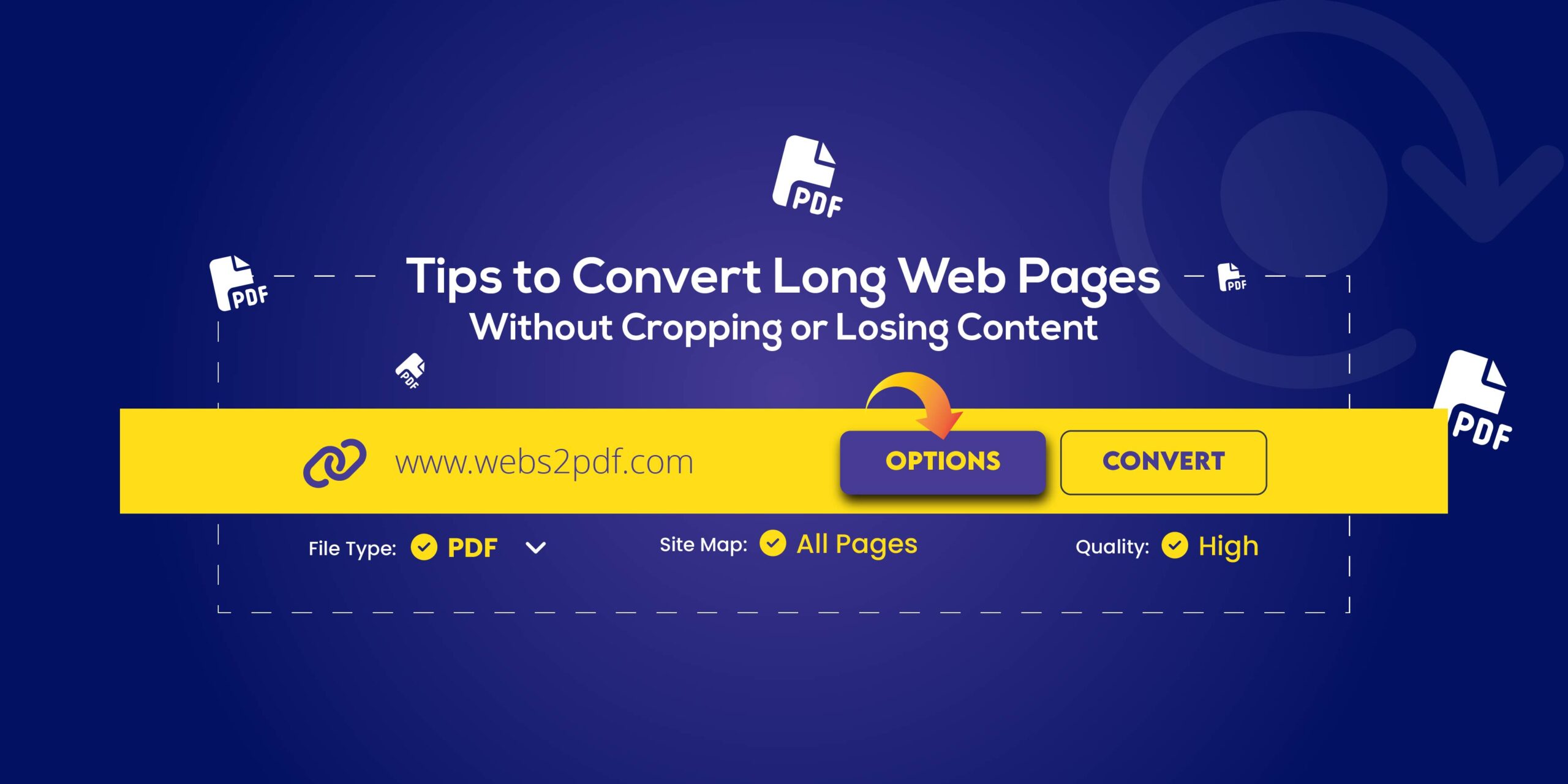
Tips to Convert Long Web Pages to PDF Without Cropping or Losing Content (2026 Guide)

Convert Long Web Pages to PDF Without Cropping

Converting long web pages to PDF without cropping or losing content has become essential in 2026 for researchers, students, and professionals who need to save, archive, or share online content.

Long pages with infinite scroll, lazy-loaded images, or fixed headers often break in standard converters, leaving missing sections or distorted layouts.

In this guide, we’ll show you step-by-step how to convert long web pages to full-page PDFs or images, recommend the best tools, and explain how to handle dynamic content and multi-section layouts effectively.

Why Long Web Pages Are Hard to Convert

Converting long web pages to PDF without cropping or losing content can be tricky due to several factors:

1. Infinite Scrolling

Many websites load content only when you scroll. Basic screenshot or PDF tools often capture only the visible portion, leaving large sections of the document missing.

2. Lazy-Loaded Images

Images that load only when visible may not appear in the final PDF, causing incomplete visuals or broken layouts

3. Fixed Headers & Sticky Elements

Menus, navigation bars, or sticky banners can overlap content, resulting in clipped or misaligned sections in the PDF.

4. Multi-Section & Complex Layouts

Websites with multiple sections, animations, or multi-column layouts often break formatting during conversion, making it difficult to  capture full-page content.

Understanding these challenges is the first step to choosing the right full-page PDF conversion tool and ensuring your web content is captured accurately.

Best Tools to Convert Long Web Pages to PDF Without Cropping

Not all PDF converters can handle long web pages with dynamic content, infinite scrolling, or complex layouts. To convert long web pages to full-page PDFs without losing content, choose tools that can:

  • Capture full-page scrolling
  • Render JavaScript, AJAX, and animations
  • Maintain proper formatting, CSS, and multi-section layouts
  • Allow custom margins, page size, and orientation

Here’s a comparison of the top tools for full-page PDF conversion:

Tool Full Page Support Handles Infinite Scroll Output Quality Best For
Webs2PDF Yes Yes ★★★★★ Research & documentation
Chrome Full-Page Screenshot Partial No ★★★☆☆ Quick single-use
Adobe Acrobat Web Capture Yes No ★★★★☆ Offline PDF workflows

Webs2PDF is the top choice because it supports lazy-loaded sections, JavaScript-heavy websites, and full-length PDF generation with no cropping.

How to Configure Conversion Settings for Best Results

To convert long web pages to PDF without cropping or losing content, it is essential to configure your conversion settings correctly. Proper settings ensure your PDF is complete, crisp, and formatted correctly.

Page Size & Orientation

Choose A4, Letter, or a custom page height for long content. Using landscape mode can help avoid horizontal cropping for wide layouts.

Zoom Level

Adjust zoom between 80-100% so all content fits properly without cutting off text or images.

Margins

Set margins to 0.5-1 inch to prevent content from being cut off at the edges.

Header & Footer Settings

Remove unnecessary browser headers or footers, or add custom ones for clean, professional PDFs.

Tip: Most modern tools, such as Webs2PDF, allow you to easily adjust these settings for full-page PDF capture, even for multi-section or dynamic webpages.

How to Handle Infinite Scroll & Lazy-Loaded Content When Converting Long Web Pages to PDF

Dynamic websites that use infinite scroll or lazy-loaded images and videos can cause incomplete PDFs if not handled properly. To convert long web pages to full-page PDFs without cropping or missing content, follow these steps:

Scroll Through the Entire Page First: Ensure all images, videos, and dynamic elements are fully loaded before capturing.

Use a Longer Delay / Wait Time: Many PDF tools offer a “wait before capture” feature. Set it to 3-5 seconds to allow lazy-loaded content to appear.

Use Tools That Support JavaScript Rendering: Converters like Webs2PDF can render JavaScript-heavy sites and handle lazy-loaded sections more reliably than standard browser extensions.

Pro Tip: For extremely long pages, preloading all sections manually or using a tool with full-page capture mode ensures nothing is cut off.

How to Convert Very Long or Multi-Section Pages

For extremely long or multi-section webpages, standard conversion methods may cut off content or break layouts. To convert long web pages to full-page PDFs without losing any sections, follow these tips:

Split the Page Into Sections: If the webpage uses endless scroll, take multiple full-page captures to ensure no content is missed.

Use Multi-Page PDF Conversion: Some PDF tools, like Webs2PDF, automatically break long pages into clean, aligned PDF pages for better readability.

Enable “Full Page Capture” Mode: Make sure your tool’s full-page capture feature is active to include all content above and below the fold, including images, tables, and dynamic elements.

Pro Tip: Combining section splits with full-page capture ensures even the longest pages are accurately converted without cropping or missing content.

Advanced Tips to Ensure Perfect Full-Page Conversion

Even with the right tools, long or multi-section webpages can sometimes result in cropped content, misaligned layouts, or low-quality images. To convert long web pages to full-page PDFs without losing content, follow these advanced tips:

Switch to Print Layout Mode: If your tool offers a print layout option, enable it for better alignment of text and images.

Remove Ads, Pop-Ups, or Unnecessary Elements: Clean up the page beforehand to prevent distractions and overlapping elements in the final PDF.

Use “Reader Mode” for Clean Output: Reader Mode simplifies the webpage layout, ensuring only the main content is captured.

Add Page Numbers, Headers, and Timestamps: For documentation or research purposes, adding these elements enhances organization and usability.

Select Higher Image Resolution (150-300 DPI): Ensure images and screenshots remain crisp and readable in the final PDF.

Pro Tip: Tools like Webs2PDF support these advanced settings, making it easier to create clean, professional full-page PDFs from even the longest webpages.

Step-by-Step: Convert Long Web Pages to PDF Without Cropping

Follow this simple process to convert long web pages into full-page PDFs without losing content:

  1. Open the Webpage and scroll to the End: Scroll through the entire page to preload all lazy-loaded images, videos, and dynamic content.
  2. Copy the Webpage URL: Make sure you have the exact URL of the page you want to convert.
  3. Open Your Conversion Tool: Use Webs2PDF or any other reliable full-page PDF converter that supports dynamic content.
  4. Paste the URL: Insert the copied URL into the tool’s input field.
  5. Adjust Key Conversion Settings: Ensure proper configuration for full-page capture:
  • Page size (A4, Letter, or custom)
  • Orientation (portrait or landscape)
  • Margins (0.5-1 inch)
  • Zoom level (80-100%)
  • Enable full-page capture mode
  1. Click Convert: Start the conversion process and wait for the tool to render the full page.
  2. Download & Review Your PDF/Image: Check that all content, images, and sections are captured correctly. Repeat the process with adjusted settings if any elements are missing.

Common Problems & How to Fix Them When Converting Long Web Pages to PDF

Even with the right tools, converting long web pages to full-page PDFs without cropping can sometimes cause issues. Here are the most common problems and how to fix them:

Images Missing

Some images may not appear if they are lazy-loaded. Scroll through the entire page before conversion or enable the “wait for lazy-load content” feature in your tool.

Content Cropped

If parts of the webpage are cut off, increase the page size, switch to landscape orientation, or ensure full-page capture mode is enabled.

Layout Broken

Complex layouts with multiple sections or dynamic elements can break during conversion. Use a Chromium-based converter like Webs2PDF to maintain accurate formatting.

File Size Too Big

High-resolution images or very long pages can result in large PDFs. Compress the PDF or lower image DPI (150-200 DPI) to reduce file size without sacrificing readability.

Pro Tip: Regularly review the PDF after conversion to ensure no elements are missing, especially for multi-section or dynamically loaded webpages.

FAQs

Here are answers to common questions about converting long web pages into full-page PDFs without losing content:

1. How do I convert a long webpage to PDF without cropping?

Use a full-page PDF converter like Webs2PDF. First, scroll through the entire page to preload all lazy-loaded content, then adjust the page size, orientation, and enable full-page capture for accurate results.

2. Can I save infinite scroll pages as a PDF?

Yes. Tools like Webs2PDF can handle dynamically loaded content and infinite scroll pages, ensuring all sections are included in the PDF without cropping.

3. How do I capture full-page screenshots?

Use tools like Snagit or Chrome’s built-in full-page capture feature. Make sure all content, including images and sections, is preloaded before taking the screenshot.

4. Which browser works best?

Chrome and Firefox offer the most accurate rendering for long webpage conversions, especially for dynamic or multi-section content.

Conclusion

Converting long web pages into full-page PDFs or images without losing content is essential for documentation, research, archiving, and professional reporting. By selecting the right tools, properly handling dynamic content and lazy-loaded elements, and adjusting key conversion settings, you can create clean, accurate, and complete PDFs every time.

For seamless, high-quality full-page PDF capture, tools like Webs2PDF make it easy to save, share, and archive even the longest or most complex webpages without cropping or missing sections. Take control of your web content and enjoy reliable, professional conversions with minimal effort.

  • December 17, 2025

How to Convert Dynamic Web Pages to PDF or Image (Ultimate 2026 Guide)

Convert Dynamic Web Pages to PDF or Image

Want to save a dynamic website for offline use, research, or documentation, but normal screenshots don’t capture everything?

Dynamic web pages load content using JavaScript, AJAX, APIs, animations, and user interactions, so traditional screenshot or Save-as-PDF options usually miss important elements.

This complete guide explains how to convert any dynamic webpage to PDF or image (JPG/PNG) with accurate rendering, including auto-loaded elements, charts, widgets, forms, dashboards, and long-scrolling pages.

What Exactly Is a Dynamic Web Page?

A dynamic web page is a webpage where content updates automatically or changes based on user interactions, unlike static pages that remain the same. Dynamic pages often rely on JavaScript, AJAX, APIs, and other interactive elements, which makes capturing them accurately more challenging.

Common Examples of Dynamic Web Pages

  • Social media feeds: Facebook, Instagram, Twitter/X
  • Live dashboards: Google Analytics, Trello, CRM tools
  • E-commerce product listings: pages with filters, stock updates, or personalized content
  • News portals with live updates: breaking news and constantly refreshed content
  • Infinite scrolling pages: blogs, galleries, or social feeds that load content continuously
  • Interactive forms, tables, and charts: data visualizations, polls, and dashboards

Static pages stay the same over time, but dynamic pages change constantly, which is why specialized tools or methods are required to capture them properly.

Why Convert a Dynamic Web Page to PDF or an Image?

Converting dynamic web pages to PDF or image ensures that all content, even real-time updates and interactive elements, is accurately captured and preserved. Here are the main benefits:

  1. Archiving & Legal Proof: A PDF acts as a timestamped, official record of the webpage exactly as seen, useful for legal, compliance, or audit purposes.
  2. Offline Research & Documentation: Ideal for students, developers, analysts, and researchers who need to work offline or include references in reports.
  3. Sharing With Clients or Teams: PDFs are professional, clean, and printer-friendly, making them perfect for presentations, client reports, or internal documentation.
  4. Store Website Layouts for UI/UX Work: Capture landing pages, design samples, and prototypes to reference or archive layouts.
  5. Preserve Real-Time or Dynamic Data: Safely store dashboards, stock charts, tables, logs, and other constantly updating content for analysis or record-keeping.

Best Methods to Convert Dynamic Web Pages

Capturing dynamic web pages accurately requires the right method depending on your goals: research, archiving, or visual sharing.

Method 1: Convert to PDF (Recommended for Research & Archiving)

Using tools like Webs2PDF, you can render JavaScript, load AJAX content, and capture the full dynamic page.

Benefits of PDF Conversion:

  • Retains complete layout and formatting
  • Supports multi-page or long-scroll pages
  • Searchable text for easy reference
  • Printable and professional format
  • High-quality export for archiving

Best for: Researchers, students, legal documentation, long articles, dashboards

Method 2: Convert to Image (JPG/PNG)

Ideal for social media sharing, presentations, or visual previews, images capture what the user sees on screen.

Benefits of Image Capture:

  • Pixel-perfect rendering of visible content
  • Great for mobile and desktop previews
  • Easy to share across platforms
  • Captures colors, buttons, and UI design

Limitations:

  • Not ideal for very long pages
  • Not searchable
  • Cannot add bookmarks, annotations, or sections

Best for: Designers, developers, marketers, or quick visual references

Step-by-Step: Convert a Dynamic Web Page to PDF

Follow these steps to accurately convert any dynamic webpage to PDF while preserving all content, layout, and interactive elements:

  1. Open the Webpage: Use Chrome, Firefox, or Edge for best compatibility.
  2. Wait for Dynamic Content to Load: Ensure all scripts, images, tables, charts, and AJAX content are fully rendered.
  3. Open Webs2PDF: Paste the URL of the webpage you want to convert.
  4. Choose Your PDF Settings
    • Page size: A4, Letter, or Custom
    • Orientation: Portrait or Landscape
    • Margins: Adjust as needed
    • Rendering delay: Important for dynamic pages to capture all content
  5. Convert to PDF: Click Convert to PDF and wait for the process to finish.
  6. Download the Final PDF: Save it to your device or cloud storage for easy access.

Pro Tip: Enable “Wait for JavaScript Load” or “Capture After Delay” to ensure all dynamic elements, charts, and feeds render fully before conversion.

Step-by-Step: Convert Dynamic Page to Full-Page Image

  1. Load the webpage fully.
  2. Scroll to the bottom to trigger lazy loading.
  3. Use the webpage-to-image tool or extension.
  4. Choose “Capture Full Page.”
  5. Save as JPG or PNG.

Tips for Perfect Dynamic Webpage Captures

1. Give extra time for AJAX/JS to finish loading

Dynamic content loads slowly, especially charts and feeds.

2. Use a 3-5 second rendering delay

Ideal for dashboards or infinite scroll pages.

3. Disable browser extensions

Some may block scripts or ads, affecting the layout.

4. Capture logged-in pages carefully

Some tools cannot render session-based pages; use browser extensions for best results.

5. Use Desktop Mode

Mobile layouts hide many sections.

Common Problems & Fixes

Problem Reason Solution
Missing tables or charts Delay too short Increase render delay
Cut-off bottom area Page height too long Enable “Full Page Capture”
Blank page in PDF JS blocked Use Chrome extension
Wrong fonts Web fonts didn’t load Enable “Load external resources.”
Not capturing logged-in pages Session issue Use browser-based capture

Best Tools for Dynamic Page Conversion (2026)

1. Webs2PDF (Best ALL-IN-ONE)

  • Dynamically loads JS
  • High-quality PDF
  • Full-page JPG/PNG
  • Multi-page support

2. Chrome Extensions

  • GoFullPage
  • FireShot
  • Screenity

3. Desktop Tools

  • Adobe Acrobat Pro
  • Snagit

PDF vs Image: Which is Better?

Feature PDF Image
Multi-page support Yes No
Searchable text Yes No
High-quality visuals Yes Yes
Easy social sharing Moderate Excellent
Best use case Research, archiving Social media, presentations

Conclusion

Converting dynamic web pages to PDF or image formats is one of the smartest ways to save, share, or archive online content exactly as you see it, without losing layout, visuals, or important interactive elements. Whether you’re a developer saving a dashboard, a researcher archiving online data, a business creating documentation, or a student preparing notes, these methods ensure you always have a clean, accurate, and reliable copy of any webpage.

By using the right tools, especially converters that support JavaScript, AJAX, and full-page rendering, like Webs2PDF, you can easily capture long-scrolling pages, charts, forms, and real-time updates. PDFs are ideal for professional use, long-term storage, and print-ready results, while images (JPG/PNG) are perfect for quick sharing, presentations, and design previews.

As websites become more dynamic every year, the ability to accurately convert and preserve web content is more important than ever. With the step-by-step methods and recommended tools in this guide, you’ll be able to convert any dynamic webpage quickly, cleanly, and without missing a single detail.

Start converting today with Webs2PDF, keep your important web content safe, shareable, and accessible anytime.

  • December 9, 2025

Webpage to PDF vs Screenshot: Which Is Better for Archiving Web Pages in 2026?

Webpage to PDF vs Screenshot

Archiving web content has become essential in today’s digital world. Whether you’re a student, researcher, journalist, developer, or business professional, saving important webpages ensures you have a permanent and reliable copy, even if the original page is changed or deleted.

But the biggest question is: Should you save a webpage as a PDF or take a screenshot?

In this fully updated 2025 guide, we compare Webpage to PDF vs Screenshot, explain which method is better for different use cases, and share best practices to archive webpages with high quality.

Why Archiving Web Pages Matters

Web pages frequently change over time; content updates, layout redesigns, URL removals, paywalls, and even full website shutdowns can make information disappear. Archiving ensures you always have a reliable, permanent copy of important content.

Benefits of Archiving Web Pages

  • Preserve information permanently even if the original webpage is deleted
  • Save research references for academic work, assignments, or citations
  • Keep records for legal, financial, or compliance purposes
  • Maintain visual or design references for UI/UX, development, or documentation
  • Avoid losing dynamic or time-sensitive content such as news, social posts, or evidence

Due to these reasons, selecting the right method of archiving (PDF vs. screenshot) is crucial to ensure long-term accessibility and accuracy.

Common Challenges in Saving Web Content

Saving or archiving a webpage isn’t always straightforward. Many users struggle with technical limitations that affect the final output. The most common challenges include:

Dynamic or Interactive Elements Not Saving Correctly

Videos, sliders, animations, pop-ups, and embedded content often break or disappear during capture.

Long or Infinite-Scrolling Pages

Scrolling pages (blogs, social feeds, product listings) may cut off, load partially, or require manual stitching.

Loss of Original Formatting & Layout

Fonts, spacing, alignment, and CSS styling sometimes change, making the saved version look different from the original webpage.

Poor Image or Text Quality

Low-resolution screenshots or poorly converted PDFs can blur details, especially when zooming.

Large File Sizes

High-quality screenshots or unoptimized PDFs can become heavy and difficult to share or store.

What Is a Webpage to PDF Conversion?

A Webpage to PDF conversion is the process of turning any online page into a PDF document while preserving its original content and layout. A good Webpage to PDF converter accurately saves:

  • Text
  • Images
  • Formatting & styles
  • Clickable links
  • Full-page layout

Key Benefits of PDF Archiving

  • Maintains original structure and styling
  • Perfect for multi-page or long-scroll pages
  • Easy to annotate, highlight, print, or share
  • Supports bookmarks, metadata, and password protection
  • Ideal for long-term archiving and offline access

Common Use Cases

  • Research papers
  • News articles
  • Invoices & financial statements
  • Legal documentation
  • Tutorials & blog posts

What Is a Screenshot?

A screenshot captures only what is visible on your screen. It’s a quick and simple way to save information visually.

Benefits of Screenshots

  • Instant capture
  • Stores the exact visual appearance
  • Great for documenting errors or temporary content
  • Useful for design or UI references

Common Use Cases

  • Saving part of a webpage
  • Capturing social media posts
  • Recording error messages
  • Visual notes for design teams

Webpage to PDF vs Screenshot: Key Differences

Below is a detailed comparison:

1. File Format & Quality

  • PDF: Preserves text clarity, layout, and images. Stays crisp even when zoomed in.
  • Screenshot: Quality depends on screen resolution. Text may blur when zoomed.

2. Page Length Capture

  • PDF: Captures full-page, multi-page, infinite scroll pages.
  • Screenshot: Only visible area, or requires multiple stitched images.

Editability & Annotation

  • PDF: Supports highlights, notes, signatures, bookmarks.
  • Screenshot: Requires third-party editors for annotation.

4. File Size

  • PDF: Compressed and optimized for long documents.
  • Screenshot: PNG/JPG images can be large.

Comparison Table: Webpage to PDF vs Screenshot

Feature Webpage to PDF Screenshot
Full-page capture ✔ Yes ✘ Limited
Text clarity on Zoom ✔ Excellent ✘ Reduces
Dynamic content support ✔ Good ✘ Weak
Edit & annotate ✔ Built-in ✘ Requires tools
File size ✔ Smaller ✘ Larger
Best for Research, legal, multipage Visual reference, quick capture

Advantages of Using Webpage to PDF

  • Perfect formatting
  • Works for long pages
  • Easy to print/share
  • Supports security (passwords)
  • Ideal for professional documentation

Advantages of Using Screenshots

  • Fast & simple
  • Best for visual elements
  • Useful for small sections
  • Great for temporary or short-term archiving

When Should You Use a PDF vs a Screenshot?

Choose PDF if you are:

  • Researcher
  • Student
  • Lawyer
  • Business professional
  • Saving long articles

Choose Screenshot if you are:

  • Designer
  • Developer
  • Social media user
  • Saving part of a webpage

Tips for High-Quality Webpage Archiving

  • Use a full-page capture tool to save the entire webpage without missing hidden sections or scrolling content
  • Avoid zooming in or out before capturing
  • Save screenshots in PNG format for maximum sharpness
  • Compress large PDFs before sharing
  • Preview and test your final output to confirm readability

Common Mistakes to Avoid

  • Missing dynamic content such as videos or sliders
  • Capturing low-resolution images
  • Skipping cloud backups
  • Using unreliable converters

FAQs

1. Which is better for archiving: PDF or a Screenshot?

PDF is better for complete, high-quality, multi-page archives. Screenshots are best for visual references.

2. Do screenshots work for long webpages?

They can, but require multiple stitched captures. PDFs are easier for long pages.

3. Can every webpage be saved as a PDF?

Yes, with reliable tools, including pages with dynamic and interactive elements.

Conclusion

  • Use PDF for complete, accurate, and long-term archiving. For easy conversion, you can use tools like Webs2PDF to save webpages quickly and reliably.
  • Use Screenshot for visual references, quick captures, or small sections of a page.

Both methods have their strengths, but PDFs are generally better for research, professional use, and preserving full content. Using Webs2PDF ensures your archives remain high-quality, secure, and accessible whenever you need them.

  • November 25, 2025

The Future of Document Conversion: Why PDFs Still Matter in 2026

Future of Document Conversion PDF

In an era dominated by cloud storage, AI document assistants, and real-time collaboration tools, one format continues to stand firm: the PDF. Despite countless new technologies, PDFs remain the universal standard for secure, consistent, and portable digital documents.

As we move into 2026, the way we convert, share, and store documents is changing, but the importance of PDFs hasn’t faded. Instead, they’ve evolved. This article explores why PDFs still matter, how document conversion is transforming, and how Webs2PDF helps individuals and businesses stay ahead in this digital shift.

A Brief History of PDFs and Document Conversion

When Adobe introduced the Portable Document Format (PDF) in 1993, its purpose was simple: create a file that looks the same on every device and operating system.

At the time, sharing documents between computers was unpredictable, fonts went missing, layouts broke, and images disappeared. PDF solved all of that.

Fast forward to 2026, and PDFs are not just digital “printouts.” They’ve evolved to include interactive forms, embedded media, digital signatures, and advanced encryption, all while maintaining their core strength: reliability.

This consistency has made PDFs the default format for invoices, contracts, research papers, resumes, and government documents worldwide.

Why PDFs Still Matter in 2026

1. Universal Compatibility

PDFs work everywhere, on desktops, tablets, and smartphones. No matter what platform or software you use, a PDF opens and displays identically.

For businesses and freelancers, this guarantees that every client, partner, or stakeholder sees the same layout and data, with no formatting surprises.

2. Security and Compliance

Modern PDFs go far beyond static text. They support:

  • Password protection
  • 256-bit AES encryption
  • Digital signatures for verification
  • Access control and redaction

In industries like finance, healthcare, and law, where privacy is non-negotiable, PDFs are essential for meeting GDPR, HIPAA, and ISO compliance standards.

3. Offline Accessibility

While most modern work happens online, not everything should depend on an internet connection.

PDFs can be stored locally, accessed offline, and annotated without cloud dependency, crucial for travelers, researchers, and professionals in areas with limited connectivity.

4. Integration with Modern Workflows

From Google Drive and Dropbox to CRM tools and project management systems, PDFs remain the common denominator for document sharing and archiving.

With tools like Webs2PDF, users can instantly convert live web content into downloadable, shareable PDFs, preserving design, links, and metadata in seconds.

Emerging Trends in Document Conversion

AI-Powered Conversion

AI now plays a major role in the evolution of document conversion. Modern converters can:

  • Extract structured data from scanned pages
  • Auto-detect headlines, tables, and charts
  • Create searchable, indexed PDFs

This saves researchers and businesses countless hours in data extraction and knowledge management.

Enhanced Collaboration Features

In 2026, PDFs are no longer static. Tools now allow real-time comments, annotations, and version tracking, turning PDFs into collaborative workspaces. Teams can share PDFs directly through the cloud and edit them securely from anywhere.

Mobile & Responsive PDFs

Mobile-first design has reached PDFs, too. Responsive PDFs automatically adjust layout for smaller screens while maintaining structure, ideal for reading reports or contracts on tablets and phones.

Cloud-Based Conversion and Storage

Web-based tools like Webs2PDF have made conversion effortless and secure. Users can convert, store, and share web content in PDF format directly from the browser, no downloads, no installations.

The future is about simplicity, automation, and accessibility.

PDFs vs Other Document Formats

You might wonder: With HTML, DOCX, and Google Docs, do we still need PDFs?

Yes, and here’s why:

Feature PDF DOCX HTML
Layout consistency ✅ Always identical ❌ Often breaks ❌ Varies by browser
Security & encryption ✅ Strong ⚠️ Limited ❌ Weak
Offline use ✅ Fully functional ✅ Limited ❌ Requires browser
Cross-platform ✅ Universal ⚠️ Requires MS Office ⚠️ Browser-dependent

PDFs remain the only format that balances readability, portability, and compliance, which is why they continue to dominate official workflows even in 2026.

Practical Applications in 2026

For Businesses & Freelancers

Invoices, contracts, proposals, and reports, all best shared as PDFs for authenticity and tracking. Tools like Webs2PDF allow users to capture live dashboards, analytics pages, or online invoices as PDFs with one click.

For Educators & Researchers

Preserving web-based academic articles, online journals, and reference materials is easier with PDF archiving. Researchers can ensure content remains accessible even if the original page changes or disappears.

For Remote Teams

Remote work depends on clear, consistent communication. Teams use PDFs to distribute training materials, guides, and collaborative reports, ensuring everyone works from the same version.

For Newsrooms & Analysts

PDF archiving is vital for referencing historical web content. Journalists and data analysts rely on PDFs to maintain snapshots of articles, ensuring authenticity even after edits.

Future-Proofing Your Document Strategy

The future of document management isn’t about abandoning the PDF; it’s about enhancing it with automation and AI.

To stay ahead, choose tools that support:

  • Batch and automated conversion
  • Custom headers, watermarks, and metadata
  • Cross-platform compatibility and cloud sync

With Webs2PDF, you can convert, store, and share PDFs that are secure, consistent, and future-ready, whether you’re preserving a blog post, generating a client report, or archiving web data.

FAQs

Q1: Will PDFs remain relevant beyond 2026?

Absolutely. With their adaptability and security, PDFs are evolving alongside AI and automation, not being replaced.

Q2: Can PDFs be interactive in 2026?

Yes. PDFs now support embedded links, forms, videos, and even JavaScript interactivity.

Q3: Are PDFs secure for sharing sensitive data?

With proper encryption and password protection, PDFs remain one of the most secure document formats available.

Q4: How does Webs2PDF make document conversion easier?

Webs2PDF allows users to convert any webpage into a downloadable, shareable PDF instantly, preserving the layout, links, and visuals.

Q5: Why should I use PDFs for archiving?

Because PDFs ensure your documents remain readable and intact, even if the source web pages change or get deleted.

Conclusion

As digital transformation accelerates, one thing remains clear: PDFs are here to stay. They’ve evolved from simple printable files to intelligent, interactive, and secure digital assets that power business, education, and research.

With Webs2PDF, converting, protecting, and preserving your digital content has never been easier. Start using it today to future-proof your workflows and ensure your documents remain accessible, consistent, and secure, well into 2026 and beyond.

  • November 18, 2025

Creative Uses of Web to PDF You Haven’t Thought Of

Creative Uses of Web to PDF

Have you ever saved a web page as a bookmark, only to find it deleted, changed, or behind a paywall later?

That’s the digital world for you: temporary, fast-changing, and easy to lose.

Web to PDF tools solve this problem beautifully. They let you capture exact, permanent copies of web pages, preserving layout, text, and visuals in one shareable, offline-friendly format.

But here’s what most people don’t realize: Saving a web page as a PDF isn’t just about archiving articles. It can transform how professionals, students, marketers, and remote teams work and collaborate.

In this guide, we’ll explore 15+ creative, practical, and future-ready ways to use Web to PDF, along with pro tips, workflow ideas, and real-world examples.

Pro Tip: You can even save this article as a PDF with Webs2PDF.com to read offline later!

Quick Wins: 6 Practical Uses You Can Start Today

1. Convert Live Dashboards into Meeting-Ready Reports

Turn your analytics dashboards, marketing data, or website performance pages into clean, shareable PDFs for clients and managers.

Instead of taking screenshots, use Webs2PDF to capture a scrollable page that includes every chart and metric, no layout loss, no extra editing.

Use case: A marketer exports a weekly performance dashboard as a PDF for reporting consistency.

2. Create Client-Ready Portfolios and Proposals

Designers, writers, and freelancers often host their work online. By converting your portfolio or proposal pages into PDFs, you get a polished, offline document perfect for presentations or clients who prefer attachments.

Add your logo and contact details, and you’ve got a ready-to-send portfolio file.

3. Archive News and Social Posts for Research or Evidence

Journalists and researchers rely on references that can vanish any time. Saving an article or post as a timestamped PDF helps preserve facts for citation or legal backup.

Example: A fact-checker archives breaking news articles before they’re edited.

4. Build Offline Training and Course Material Packs

Teachers and corporate trainers can easily convert educational blogs, tutorials, or documentation into portable PDFs for their learners, no internet required.

Combine multiple pages into a single “course pack” using Webs2PDF’s merge option for a professional, printable manual.

5. Standardize Onboarding Documents

Businesses can capture their onboarding guides, internal wikis, or process documentation as PDFs. This ensures new hires always have a consistent version, even if the internal site changes later.

Tip: Add page numbers, version tags, and your company logo for branding consistency.

6. Bundle Multiple Web Pages into a Single Client Deliverable

Have you ever needed to send 10 links to a client? Instead, convert and combine them into one neat, indexed PDF.

It saves time, looks professional, and guarantees the content won’t change after delivery.

Productivity Hacks for Teams & Freelancers

1. Automate Weekly Report Snapshots

Freelancers and small teams often need recurring reports. Tools like Zapier or Make (Integromat) can trigger Webs2PDF’s API weekly to convert your analytics, task dashboards, or social media reports automatically.

No manual clicks, just ready-made PDF reports in your inbox or Google Drive.

2. Snapshot + Annotate Workflows for Async Teams

Remote teams rely on async communication. Instead of waiting for everyone to check the same page live, capture your design feedback, project progress, or documentation in PDF form.

Then add comments and highlights directly within the PDF before sharing with your team.

3. Turn Temporary Threads into Permanent Records

Slack discussions, Jira tickets, or web-based chat logs often disappear with time. Convert key discussions into PDFs for record-keeping or client transparency.

It’s a smart way to maintain project evidence, without cluttering your workspace.

Creative Marketing & Growth Uses

1. Turn Blog Posts into Instant Lead Magnets

Marketers can convert high-performing blog posts into downloadable PDF guides. Offer them as “Free resources” in exchange for email sign-ups, great for lead generation.

Example: Convert “10 Ways to Optimize Landing Pages” into a branded PDF checklist with Webs2PDF.

2. Localized Print Flyers from Landing Pages

Running regional campaigns? Convert your online landing page into a localized flyer for offline promotion. You can print, distribute, or email them, without hiring a designer for every version.

3. Archive Sponsored Content and Collaborations

Keep permanent records of your sponsored articles, influencer posts, and landing pages for internal tracking and ROI audits.

If a page gets updated or removed later, your archived PDF remains intact proof of delivery.

Research, Legal & Archival Uses

1. Preserve Versioned Evidence for Journalists and Legal Teams

When accuracy matters, timestamped PDFs are critical. Journalists, compliance officers, and lawyers can archive web content exactly as it appeared at a given time, crucial during audits or investigations.

Workflow idea: Save with date-based file names like companyname-pressrelease-2025-11-11.pdf.

2. Batch Archiving for Long-Term Research Projects

Researchers dealing with multiple references can use Webs2PDF’s batch conversion to archive hundreds of sources at once.

This ensures consistent formatting, searchable text, and easy citation management.

3. Extract Data from Image-Heavy PDFs

If you frequently save pages with charts or infographics, combine Web to PDF with OCR tools to extract tables, text, and data.

It’s an efficient way to turn visual information into structured research material.

The Future of Web to PDF: What’s Coming Next

PDF conversion is evolving fast. Here’s what’s ahead, and how Webs2PDF is preparing for it.

1. Automated Archiving & Change Tracking

Imagine scheduling daily snapshots of critical web pages, automatically stored as versioned PDFs showing changes over time. Perfect for compliance and monitoring.

2. Blockchain Anchoring for Authenticity

Future versions of Webs2PDF could timestamp and hash each PDF to the blockchain, offering tamper-proof evidence of digital content.

This is a game-changer for legal, media, and enterprise use.

3. AI Summaries and Metadata Tagging

AI-enhanced exports could summarize web content, extract key entities, and auto-generate citations directly inside the PDF. Researchers would save hours of manual work.

4. Integrated E-Signature Workflows

A contract on a web page could be instantly converted to PDF, signed digitally, and archived, streamlining business operations.

5. Accessibility & Smart Layouts

The future of PDFs is inclusive. Expect intelligent exports that retain alt text, logical reading order, and accessibility tags for screen readers, making content more usable for everyone.

Tools, Tips & Quick Checklist Before You Convert

Here’s a mini pre-conversion checklist for best results:

  • Log in to any website before converting (for member-only content)
  • Hide pop-ups, ads, and overlays if possible
  • Choose Single Page Mode for long-scroll content
  • Select High Quality PDF for image-rich pages
  • Add tags or metadata for easy organization
  • Use meaningful filenames like topic_source_date.pdf
  • For private content, use Incognito Mode or Webs2PDF’s “Private Conversion” feature

Real-World Example Workflows

Case Study 1: Freelancer Invoice Automation

Sara, a freelance designer, uses Webs2PDF to convert her online invoices (from Notion and PayPal) into PDFs automatically every month.

She then merges them with project scopes and stores them in Google Drive folders, creating a complete audit trail for her accountant.

Case Study 2: Researcher Citation Archiving

A university researcher uses Webs2PDF’s batch conversion to save 150+ news articles for her thesis. Each file is tagged with author, date, and source, and later imported into Zotero for quick reference.

Result: no lost links, no broken citations, and a perfectly organized digital library.

Beyond Saving: Start Creating with Webs2PDF

Converting a web page to PDF isn’t just about saving; it’s about stabilizing information. Whether you’re managing projects, teaching students, running campaigns, or archiving research, Webs2PDF transforms the web into something permanent, portable, and professional.

Try it now: Paste any URL into Webs2PDF.com and see how easily you can preserve and share your web content.

FAQs

Q1: Can I convert password-protected pages?

Only if you’re logged in. For secure pages, use Webs2PDF’s private conversion mode.

Q2: Are the PDFs searchable?

Yes! If the web content is text-based, the resulting PDF is fully searchable.

Q3: Is my data safe?

Absolutely. Webs2PDF doesn’t store your converted content permanently; your privacy and security are protected.

Q4: Does it work on mobile?

Yes, the tool is optimized for both desktop and mobile browsers.

  • November 11, 2025

Behind the Scenes: How Webs2PDF Protects Your Privacy

How Webs2PDF Protects Your Privacy

In today’s digital world, privacy is more than a preference, it’s a necessity. Whether you’re a researcher archiving articles, a freelancer managing client invoices, or a professional handling sensitive business data, the risk of accidentally exposing information is real.

Webs2PDF understands these concerns. Beyond being a convenient tool to convert web pages into PDFs, it’s designed to protect your data and maintain your privacy every step of the way. In this article, we’ll take you behind the scenes to explore exactly how Webs2PDF safeguards your content, while offering creative workflows that keep your work secure.

Why Privacy Matters in Web to PDF Conversion

When you convert web pages into PDFs, several risks can arise:

  • Sensitive content exposure: Financial reports, private research, or confidential client data may be unintentionally stored online.
  • Data interception: Unsecured tools can allow others to access your conversion data.
  • Loss of control: Sharing a PDF without awareness of embedded metadata or file settings can lead to unintended disclosure.

Webs2PDF tackles these issues by implementing security-first design principles, giving users confidence that their content remains private, secure, and under their control.

How Webs2PDF Protects Your Data

1. No Permanent Storage

When you convert a web page using Webs2PDF, your PDF is temporarily processed and made available for download. The servers do not store your files permanently, ensuring that sensitive content doesn’t linger online. Once the download is complete, the file is deleted from the system.

2. Private Conversion Mode

For confidential pages, Webs2PDF offers a private conversion option. This ensures:

  • The webpage content is never cached.
  • PDFs are generated securely and are only accessible to the user.
  • Ideal for financial statements, client dashboards, or any restricted online content.

How to use:

  1. Paste the URL of the page you want to convert.
  2. Select Private Conversion in the options menu.
  3. Download your PDF directly.

3. Secure Transmission with HTTPS

All web traffic between your browser and Webs2PDF’s servers is encrypted with HTTPS. This means that your data is protected from interception during conversion, making it safe to handle sensitive URLs or confidential information.

4. Minimal Metadata Collection

Webs2PDF only collects essential data needed for processing. There’s no unnecessary tracking or sharing with third parties. This minimalistic approach ensures user privacy while still delivering a reliable PDF conversion experience.

5. Email Notifications with Privacy in Mind

If you choose to receive an email when your PDF is ready, Webs2PDF ensures:

  • Notifications do not contain the content of your PDF.
  • Your email is used solely for sending alerts.
  • This is an optional feature, so you remain in full control.

6. User-Controlled Customization

Webs2PDF allows full control over your PDFs:

  • Add custom watermarks for branding or protection.
  • Enable headers and footers with page numbers, dates, or titles.
  • Decide on color layers or page orientation.

Security Features for Professionals and Teams

  • Batch Conversion: Convert multiple pages or entire sites without compromising privacy.
  • Enterprise Security: Corporate plans allow team-based access with controlled permissions.
  • Encrypted PDFs: Ideal for storing sensitive research, financial reports, or client projects.
  • Compliance Ready: Webs2PDF aligns with general privacy standards to provide confidence in data handling.

Tips for Users to Enhance Privacy

  1. Use Private/Incognito Mode for sensitive pages.
  2. Avoid URLs containing personal query parameters unless necessary.
  3. Enable email notifications only if required.
  4. Regularly clear browser cookies or history to maintain privacy.
  5. Name your files clearly to avoid accidental exposure (e.g., client_invoice_2025.pdf).

Real-World Scenarios

Scenario 1: Freelancer Invoice Management

Sara, a freelance designer, converts client invoices and project reports into PDFs using Webs2PDF’s private conversion mode. She then merges multiple files for easy submission and offline storage, ensuring no sensitive data is stored online.

Scenario 2: Academic Research

A university researcher uses Webs2PDF to archive dozens of articles for a thesis. Each PDF is securely stored offline with consistent metadata, guaranteeing accurate citations without compromising privacy.

Scenario 3: Corporate Documentation

A marketing team converts multiple web dashboards and content pages for internal reporting. Using batch conversion and team permissions, they ensure sensitive data remains accessible only to authorized team members.

Future-Proof Privacy Measures

  • Encryption at Rest: Future enterprise PDFs may include optional encryption to safeguard stored files.
  • Auto-Deletion: Temporary files are automatically deleted after download.
  • Regulatory Compliance: Plans to align fully with GDPR and CCPA regulations.
  • Anonymous API Integration: Corporate teams can perform batch conversions without exposing user data.

FAQs About Privacy

Q1: Is my data stored on Webs2PDF servers?

Guest users (Free plan): Files are temporarily processed and deleted after conversion.

Paid users: Converted PDFs are saved to your account history for convenience.

Q2: Can I convert password-protected pages safely?
Yes, as long as you log in during the conversion process. Use Private Conversion for extra security.

Q3: Are email notifications secure?
Yes, they contain only alerts — not file content.

Q4: Does batch conversion compromise privacy?
No. It follows the same privacy standards as single conversions.

Q5: Can I trust Webs2PDF for sensitive client documents?
Absolutely.

Conclusion

Privacy is a fundamental part of Webs2PDF’s design. Every feature, from one-click conversion to batch processing and private modes, is built with security, confidentiality, and user control in mind.

Whether you’re a freelancer, researcher, or corporate professional, Webs2PDF allows you to convert web pages into PDFs confidently, knowing your data is protected.

Try Webs2PDF today and experience secure, reliable, and private web-to-PDF conversions.

  • October 28, 2025

Why Professionals Save Invoices and Reports as PDFs: A Complete Workflow

Why Professionals Save Invoices and Reports as PDFs

Every professional, whether a freelancer, accountant, manager, or business owner, deals with invoices, reports, and statements daily. These documents are the backbone of business operations, and storing them properly ensures financial accuracy, legal compliance, and smooth collaboration.

That’s why more professionals are switching to PDFs as their standard document format.

In this article, we’ll explain why saving invoices and reports as PDFs is essential, and how tools like Webs2PDF simplify the entire workflow, from creation to archiving.

Why PDFs Are the Preferred Format for Professionals

1. Guaranteed Layout Consistency

Unlike Word, Excel, or HTML pages that can look different across devices, PDFs preserve the exact design, fonts, and structure.

Your invoice or financial report will appear identical, whether opened on a phone, tablet, or desktop.

2. Professional and Tamper-Proof

PDFs are ideal for official or legal documents. Once finalized, they can’t be easily altered, ensuring data authenticity.

Adding password protection or digital signatures further enhances document security.

3. Compact and Easy to Share

A single PDF can contain multiple pages of data, charts, and summaries, all in a small file size that’s easy to email or upload.

No formatting issues. No broken links.

4. Long-Term Archiving

Invoices and reports often need to be stored for years for auditing or compliance. PDFs are perfect for this because they remain readable and intact even after long periods.

The Complete Workflow: From Web to PDF

With online dashboards, accounting software, and reporting tools becoming standard, most invoices and reports today are web-based.

Here’s how professionals use Webs2PDF to streamline the entire process:

Step 1: Access the Online Invoice or Report

Open your invoice generator, analytics dashboard, or financial report in your browser.

Step 2: Copy the Page URL

Simply copy the web address (URL) of your invoice, report, or summary.

Step 3: Go to Webs2PDF.com

Paste the link in the input field and click “Convert to PDF.”

Webs2PDF instantly captures your entire page, visuals, charts, tables, and text, and turns it into a clean, high-quality PDF.

Step 4: Review and Save the File

You can download your PDF immediately. Save it locally, email it to clients, or upload it to your company’s shared folder.

Step 5: Organize and Archive

Create a digital filing system (by client, month, or project) to store all PDFs securely for easy retrieval later.

Common Use Cases Across Industries

Profession How PDFs Help
Freelancers & Consultants Save and send invoices that clients can easily open and print.
Finance Teams Archive monthly and annual reports for auditing.
Project Managers Export progress reports or budgets from dashboards to share with stakeholders.
Marketers Convert analytics dashboards or campaign performance data into PDFs for presentations.
Accountants Keep client records and billing statements organized and secure.

Why Webs2PDF Is the Ideal Solution

  • Pixel-perfect conversion: preserves all tables, charts, and visuals.
  • Single-scroll PDF: no breaks across multiple pages.
  • Custom options: choose page size, layout, or image quality.
  • Fast performance: convert invoices or reports in seconds.
  • Secure downloads: your data is not stored or shared.

Pro Tips for a Smooth Document Workflow

  • Batch Convert Reports: Upgrade to the Professional Plan to save multiple invoices in one go.
  • Use Cloud Storage: Store converted PDFs in Google Drive or Dropbox for easy access.
  • Name Files Clearly: Include the date and client name in file titles for easy organization.
  • Automate Weekly Backups: Regularly download and store reports for record-keeping.
  • Set Passwords: Add basic protection for confidential client data.

The Benefits at a Glance

Feature Benefit
Consistent formatting Professional appearance across all devices
Compact file size Easy to send via email or WhatsApp
Security options Password-protected, read-only PDFs
Long-term access Ideal for tax and audit documentation
Offline viewing Accessible anytime, even without internet

Simplify Your Professional Workflow

Managing invoices and reports shouldn’t be a hassle.

With Webs2PDF.com, you can convert, save, and share any web-based invoice or analytics report in seconds, with guaranteed accuracy.

Start using Webs2PDF today to make your document management faster, smarter, and stress-free.

Try it now — your next invoice is just one click away!

Frequently Asked Questions (FAQs)

Q1. Why should I save invoices as PDFs?
Because PDFs preserve layout, are easy to print or email, and help maintain secure, professional records.

Q2. Can I convert accounting software pages to PDF?
Yes! You can convert pages from QuickBooks, FreshBooks, Google Sheets, and similar tools using Webs2PDF.

Q3. How do I organize my PDFs efficiently?
Create folders by year or client, use consistent naming, and store backups securely.

  • October 21, 2025

Web to PDF for Teams: How Remote Workers Use PDFs for Collaboration

Web to PDF for Teams

Remote work has transformed how teams communicate, share ideas, and manage documents. From project briefs to live reports, everything now happens online. But with so many collaboration tools and browser-based apps, it’s easy for important information to get lost, reformatted, or locked behind logins.

That’s where PDFs bridge the gap. By converting web content into reliable, shareable documents, remote teams can ensure consistency, accessibility, and clarity, no matter where they’re working from.

In this guide, you’ll discover how remote workers use Webs2PDF to streamline collaboration, keep records organized, and maintain team productivity.

Why PDFs Are Essential for Remote Collaboration

1. Consistent Formatting Across Platforms

One of the biggest remote work challenges is ensuring documents look the same for everyone. PDFs solve that.

No matter which device or browser your teammates use, PDFs preserve exact layouts, fonts, and visuals, ensuring everyone sees identical content.

2. Easier Sharing and Offline Access

When working remotely, not everyone is online 24/7. Converting key resources, like reports, guidelines, or dashboards, to PDF format ensures they can be accessed anytime, even offline.

Team members can easily download, annotate, and share PDFs without needing special software.

3. Secure Document Distribution

Confidential data and internal reports require secure sharing. With PDF password protection and restricted editing, you can safely distribute sensitive information across teams.

4. Ideal for Documentation and Record Keeping

From meeting notes to project updates, storing documents as PDFs ensures your records are organized, searchable, and ready for reference, a huge advantage for distributed teams.

Real-World Use Cases for Remote Teams

Here’s how remote professionals and teams are using Webs2PDF in their daily workflows:

  • Marketing Teams: Save live campaign reports or analytics dashboards as PDFs to review in meetings.
  • Developers: Archive documentation, release notes, and product changelogs for reference.
  • Designers: Capture online mockups or client feedback pages into shareable PDFs.
  • Managers: Export project updates or HR policies into single-file summaries for easy sharing.

No matter your role, PDFs unify communication and preserve accuracy across the entire remote workflow.

Step-by-Step: How Remote Teams Use Webs2PDF for Collaboration

Step 1: Copy the URL of Your Web Document

Whether it’s a Notion page, Trello board, or Google Data Studio dashboard, just copy its link.

Step 2: Go to Webs2PDF.com

Open Webs2PDF, the most accurate tool to convert web pages into professional, high-resolution PDFs.

Step 3: Paste the Link and Click “Convert”

Paste the URL into the input field and hit “Convert to PDF.”

Within seconds, your live page is transformed into a single, scrollable PDF, preserving every element.

Step 4: Share the PDF with Your Team

You can now email the file, upload it to Slack, or store it in your team’s shared drive. Everyone gets a consistent, accessible copy, instantly.

Collaboration Benefits of Using PDFs

Feature Benefit for Remote Teams
Universal Format Opens on any device, OS, or browser
Offline Access View reports even without the internet
Security Options Password-protect or lock editing
Archiving Keep long-term versions of live content
Easy Sharing Attach in chats, emails, or project hubs

PDFs eliminate confusion, maintain version control, and make asynchronous work smoother.

Pro Tips for Team Productivity

  • Create Team Templates: Save branded PDFs for reports or proposals.
  • Enable “Single Page” Mode: Perfect for scrollable web dashboards.
  • Combine Reports: Merge multiple PDFs into one summary document.
  • Use Batch Conversion (Pro Plan): Convert several URLs at once for weekly updates.
  • Add Cloud Integrations: Store converted PDFs directly in Google Drive or Dropbox.

Why Webs2PDF Is Perfect for Remote Teams

Webs2PDF isn’t just a converter; it’s a productivity enabler.

It helps remote teams:

  • Standardize document formats
  • Maintain professional design and branding
  • Save time by automating conversions
  • Collaborate securely and efficiently

Whether you’re working across time zones or departments, Webs2PDF ensures your content remains accessible and consistent everywhere.

Start Collaborating Smarter

Empower your team to stay organized and efficient.

Next time you share an important document or live report, convert it to PDF using Webs2PDF.com.

With just one click, your team can access, share, and collaborate without worrying about formats or permissions.

Try Webs2PDF today and simplify your remote document workflow.

Frequently Asked Questions (FAQs)

Q1. How can teams collaborate using PDFs?

Teams can annotate, highlight, and comment on PDFs using tools like Adobe Acrobat or built-in browser readers. PDFs also make it easy to distribute finalized content to all members consistently.

Q2. Can I convert a private workspace or dashboard to PDF?

Yes, if you have access to view it in your browser, Webs2PDF can convert it. Just ensure any required logins are completed before conversion.

Q3. How do teams save multiple web pages to PDF at once?

Webs2PDF’s Professional and Corporate plans support batch conversions, ideal for weekly reports, analytics summaries, or documentation archives.

Recent Posts
Webpage to PDF Blank Page Issue

Webpage to PDF Blank Page Issue: Causes, Fixes, and Solutions

January 13, 2026
Save Web Pages as High-Quality PDF

Save Web Pages as High-Quality PDF Without Installing Any App

December 30, 2025
Convert Long Web Pages to PDF Without Cropping

Tips to Convert Long Web Pages to PDF Without Cropping or Losing Content (2026 Guide)

December 23, 2025
Convert Dynamic Web Pages to PDF or Image

How to Convert Dynamic Web Pages to PDF or Image (Ultimate 2026 Guide)

December 17, 2025
Webpage to PDF vs Screenshot

Webpage to PDF vs Screenshot: Which Is Better for Archiving Web Pages in 2026?

December 9, 2025
Blog Categories
Website to PDF
Subscribe

Stay Updated with Webs2PDF

Join our newsletter and never miss a tip.

Next Up on Webs2pdf Blog

Webpage to PDF Blank Page Issue
Webpage to PDF Blank Page Issue: Causes, Fixes, and Solutions
  • January 13, 2026
Save Web Pages as High-Quality PDF
Save Web Pages as High-Quality PDF Without Installing Any App
  • December 30, 2025
Convert Long Web Pages to PDF Without Cropping
Tips to Convert Long Web Pages to PDF Without Cropping or Losing Content (2026 Guide)
  • December 23, 2025
Convert Dynamic Web Pages to PDF or Image
How to Convert Dynamic Web Pages to PDF or Image (Ultimate 2026 Guide)
  • December 17, 2025
Webpage to PDF vs Screenshot
Webpage to PDF vs Screenshot: Which Is Better for Archiving Web Pages in 2026?
  • December 9, 2025
Future of Document Conversion PDF
The Future of Document Conversion: Why PDFs Still Matter in 2026
  • November 25, 2025
Follow Us
Pinterest-p Reddit-alien Github
  • About
  • Benefits
  • Reviews
  • Pricing
  • FAQ
  • Blog
  • Contact

Copyright © 2026 webs2pdf.com All rights reserved.

  • Privacy Policy
  • Cookie Policy
  • Terms of Use
  • Refund Policy
Webs 2 PDF Logo

Transforming Web Content into Portable, Professional Documents

Tick
  • Home
  • Benefits
  • Reviews
  • Pricing
  • FAQs
  • Blog
  • Contact
  • Home
  • Benefits
  • Reviews
  • Pricing
  • FAQs
  • Blog
  • Contact
SIGN IN