Skip to content
Webs 2 PDF Logo
  • Home
  • Benefits
  • Reviews
  • Pricing
  • FAQs
  • Blog
  • Contact
  • Home
  • Benefits
  • Reviews
  • Pricing
  • FAQs
  • Blog
  • Contact
sign in

Category: Website to PDF

  • October 14, 2025

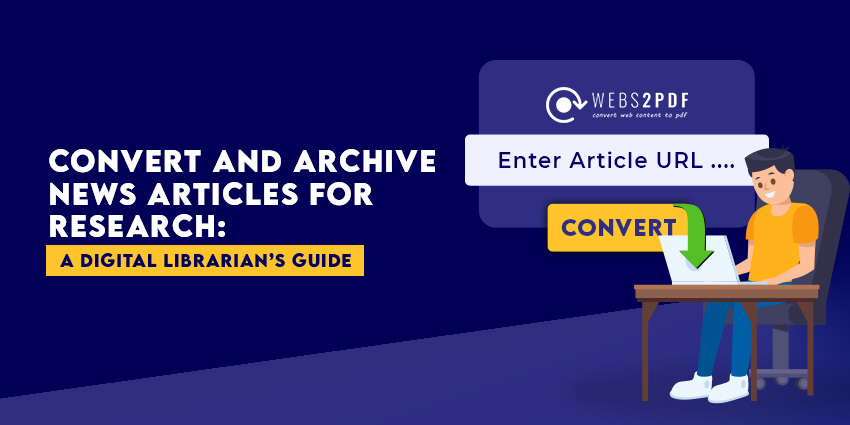
Convert and Archive News Articles for Research: A Digital Librarian’s Guide

Convert and Archive News Articles for Research

In a world where online information changes every second, news articles can disappear or update overnight, leaving researchers, journalists, and students without reliable references.

That’s why digital librarians, researchers, and educators are turning to PDF archiving as a trusted method to preserve articles exactly as they appear online.

In this guide, we’ll explore how to convert and archive web articles for research, why PDFs are the gold standard for digital preservation, and how Webs2PDF makes it effortless.

Why Archiving News Articles Matters

Whether you’re documenting a breaking story, tracking historical coverage, or citing references in a paper, online content is ephemeral.

Articles can:

  • Get updated or edited without notice
  • Be moved behind paywalls
  • Disappear entirely due to website updates

By converting these articles into PDFs, researchers ensure access to permanent, verifiable, and citable records that remain unchanged, even years later.

Why PDFs Are the Perfect Format for Research Archiving

1. Permanent and Uneditable

Once saved, PDFs preserve the exact version of an article, including headlines, timestamps, author names, and embedded media. This helps researchers cite credible, verifiable sources.

2. Works Across All Devices

Whether viewed on a phone, tablet, or desktop, PDFs maintain their layout and readability, making them perfect for academic libraries and digital repositories.

3. Searchable and Organized

Modern PDFs support searchable text, allowing librarians and researchers to locate keywords or names instantly, saving hours of manual browsing.

4. Lightweight and Portable

Unlike web archives or screenshots, PDFs are small in size yet high in fidelity, making them easy to store, share, and back up.

How to Convert News Articles to PDF — Step-by-Step

Archiving articles manually can be tedious, but Webs2PDF streamlines it in seconds.

Here’s the simple process researchers use every day:

Step 1: Find the Article You Need

Open the online article you want to preserve, whether it’s a breaking news story, journal feature, or academic report.

Step 2: Copy the Article URL

Highlight and copy the web address (URL) from your browser’s address bar.

Step 3: Go to Webs2PDF.com

Paste the URL in the input box and click “Convert to PDF.”

Step 4: Download and Save

Within moments, Webs2PDF creates a pixel-perfect PDF that captures the entire page layout, images, ads, and all, exactly as seen online.

Step 5: Organize Your Archive

Store your PDFs by topic, publication, or date. You can also back them up in cloud drives like Google Drive, OneDrive, or Dropbox.

How Researchers and Institutions Use PDF Archives

Use Case Description
Academic Researchers Capture online references for dissertations, papers, or literature reviews.
Journalists Preserve evolving stories or deleted pages for investigative work.
Librarians Build digital archives of historical and regional news coverage.
Educators Save relevant articles for class readings or academic resources.
Policy Analysts Document public statements, press releases, and data sources.

Why Use Webs2PDF for Archiving

Webs2PDF isn’t just a converter; it’s a reliable research preservation tool.

  • Authentic Rendering: Captures every element exactly as displayed online.
  • One-Click Conversion: No installation or sign-up needed.
  • Secure Downloads: No content stored on servers.
  • Long-Scroll Option: Archive complete articles without page breaks.
  • Batch Conversion (Pro Plan): Save multiple URLs for larger research projects.

Whether you’re maintaining a personal research library or building institutional archives, Webs2PDF ensures accuracy, permanence, and peace of mind.

Best Practices for Article Archiving

  • Save Source Info: Include the publication name and date in your filename.
  • Use Consistent Folders: Organize by publication or topic for easy retrieval.
  • Add Metadata: Record author names or article tags in a reference file.
  • Back Up Regularly: Store copies on both local and cloud drives.
  • Use Version Control: For ongoing stories, label each PDF with a version date.

Quick Comparison: Archiving Methods

Method Pros Cons
Screenshot Fast and simple Not searchable; limited quality
Web Archive (.html) Interactive elements preserved Can break with time; large file size
PDF via Webs2PDF Replica, searchable, permanent None for research use

Example: Academic Workflow in Action

A university researcher studying climate policy collects 100+ online articles from various news outlets.

Using Webs2PDF’s Professional Plan, they batch-convert all URLs into searchable PDFs, store them in Drive, and reference them later for analysis.

No lost links. No missing data. Just clean, accessible archives.

Preserve Knowledge: Start Archiving Today

Don’t lose valuable research material to disappearing web pages. With Webs2PDF.com, you can convert and archive any online article in seconds, ensuring your research stays reliable, organized, and accessible.

Try Webs2PDF now, and make your research archives future-proof.

Frequently Asked Questions (FAQs)

Q1. Why not just bookmark news articles instead of saving them as PDFs?

Bookmarks don’t preserve article content; if a page changes or is deleted, you lose access. PDFs give you a permanent offline copy.

Q2. Are PDFs searchable for research keywords?

Yes. Webs2PDF creates fully searchable PDFs, allowing you to locate names, phrases, and data instantly.

Q3. Can I archive multiple URLs at once?

Yes. The Professional and Corporate Plans support batch conversion, ideal for researchers managing large archives.
  • October 8, 2025

Webs2PDF vs Other Tools: The Only Converter That Preserves Content & Images Perfectly

Webs2PDF vs Other Tools

When it comes to converting a web page into a high-quality PDF, most tools fall short. Users often face missing images, broken layouts, and incomplete pages. But one issue that’s rarely discussed, and equally frustrating, is page splitting.

Most converters break your web page into multiple chunks or A4-style pages, ruining the flow and design.

That’s where Webs2PDF is different.

Webs2PDF doesn’t just capture every detail perfectly; it also delivers your entire web page as a single, continuous PDF file without unnecessary page breaks, ensuring smooth readability and complete accuracy.

Why Most Web to PDF Tools Fail

While many converters like Web2PDFConvert, PDFMyURL, and iLovePDF claim to be accurate, they struggle with:

  1. Page Breaks: They divide long web pages into multiple pages, cutting off sections mid-way.
  2. Missing Images: Visuals and banners fail to load or appear blank.
  3. Lost Layouts: Dynamic elements, CSS styling, and fonts don’t render correctly.
  4. Incomplete Data: Text-heavy sites often lose sections or truncate paragraphs.
  5. Limited Customization: Most tools offer limited control over format and quality.

These issues make the final PDF look unprofessional and incomplete, especially for users who need perfect documentation.

What Makes Webs2PDF Truly Different

Webs2PDF isn’t just another converter; it’s a precision rendering engine built to capture your website exactly as it appears online.

Every pixel, image, font, and section is replicated with pixel-perfect accuracy, resulting in a single, continuous PDF that mirrors your live web page, without missing anything.

1. Single Continuous PDF No Page Breaks, No Gaps

Unlike most tools that slice your content into A4-style pages, Webs2PDF generates a smooth, scrollable PDF in one continuous flow.

This makes it ideal for:

  • Long-form web pages, landing pages, or blogs
  • Design portfolios or product catalogs
  • Website snapshots and marketing reports

With a single-page layout, your PDF looks cleaner, more professional, and easier to read.

2. Image-Perfect Rendering Every Visual Preserved

From banners and infographics to product images and icons, Webs2PDF ensures no visual is left behind.

All graphics are captured in full resolution, without distortion, compression, or blank placeholders, so your PDF looks exactly like your live site.

3. 100% Layout & Style Accuracy

Your website’s layout, typography, and color scheme are preserved exactly as they appear online.

Whether your site uses modern CSS, animations, or responsive design, Webs2PDF maintains every element for a true-to-design PDF output.

4. Handles Dynamic & JavaScript-Heavy Pages

Many converters struggle with JavaScript-based websites, but not Webs2PDF.

Our engine can process interactive elements, sliders, tabs, and lazy-loaded content, ensuring that even the most complex pages render fully and accurately in PDF form.

5. Fast, Seamless, and Reliable Conversion

Speed meets precision; even large or media-rich pages are converted within seconds.

No freezing, no delays, and no loss of quality, just a smooth, efficient conversion every time.

Comparison: Webs2PDF vs Other Popular Tools

Feature Webs2PDF Web2PDFConvert PDFMyURL iLovePDF
Single Continuous PDF ✅ ❌ ❌ ❌
Complete Content Capture ✅ ⚠️ Partial ⚠️ Partial ❌
Image Preservation ✅ ⚠️ ❌ ⚠️
Page Layout Accuracy ✅ ⚠️ ⚠️ ⚠️
JavaScript Page Support ✅ ❌ ❌ ❌
Conversion Speed ⚡ Fast ⚠️ Moderate ⚠️ Slow ⚠️ Moderate

Result: Only Webs2PDF provides a single-page, fully accurate, image-perfect PDF output.

Real Example: Tarkhan.pk Conversion Test

To test performance, we generated a PDF from Tarkhan.pk using several tools.

  • Competitors’ PDFs missed images, broke the layout into multiple pages, and skipped parts of the content.
  • Webs2PDF, on the other hand, delivered a clean, single-file PDF that preserved every section, image, and style, just like the live site.

The difference is clear: Webs2PDF doesn’t just convert, it replicates.

Why “Single Page” PDFs Matter

A single continuous PDF isn’t just about convenience; it improves usability, readability, and presentation:

  • Ideal for website archives and marketing reports
  • Easy to scroll and review without page cuts
  • Looks more professional and visually cohesive
  • Ensures nothing is lost between page breaks

For teams, clients, and documentation purposes, a single-page full-capture PDF means you always have a perfect digital copy of your website.

Final Verdict

Most web-to-PDF tools give you fragments of your website, but Webs2PDF gives you the whole picture.

  • 100% content and image accuracy
  • Single continuous PDF output
  • Perfect layout preservation
  • Fast and reliable performance

If you want a true representation of your website in PDF format, there’s only one choice: Webs2PDF.com, the most accurate web-to-PDF converter online.

  • September 23, 2025

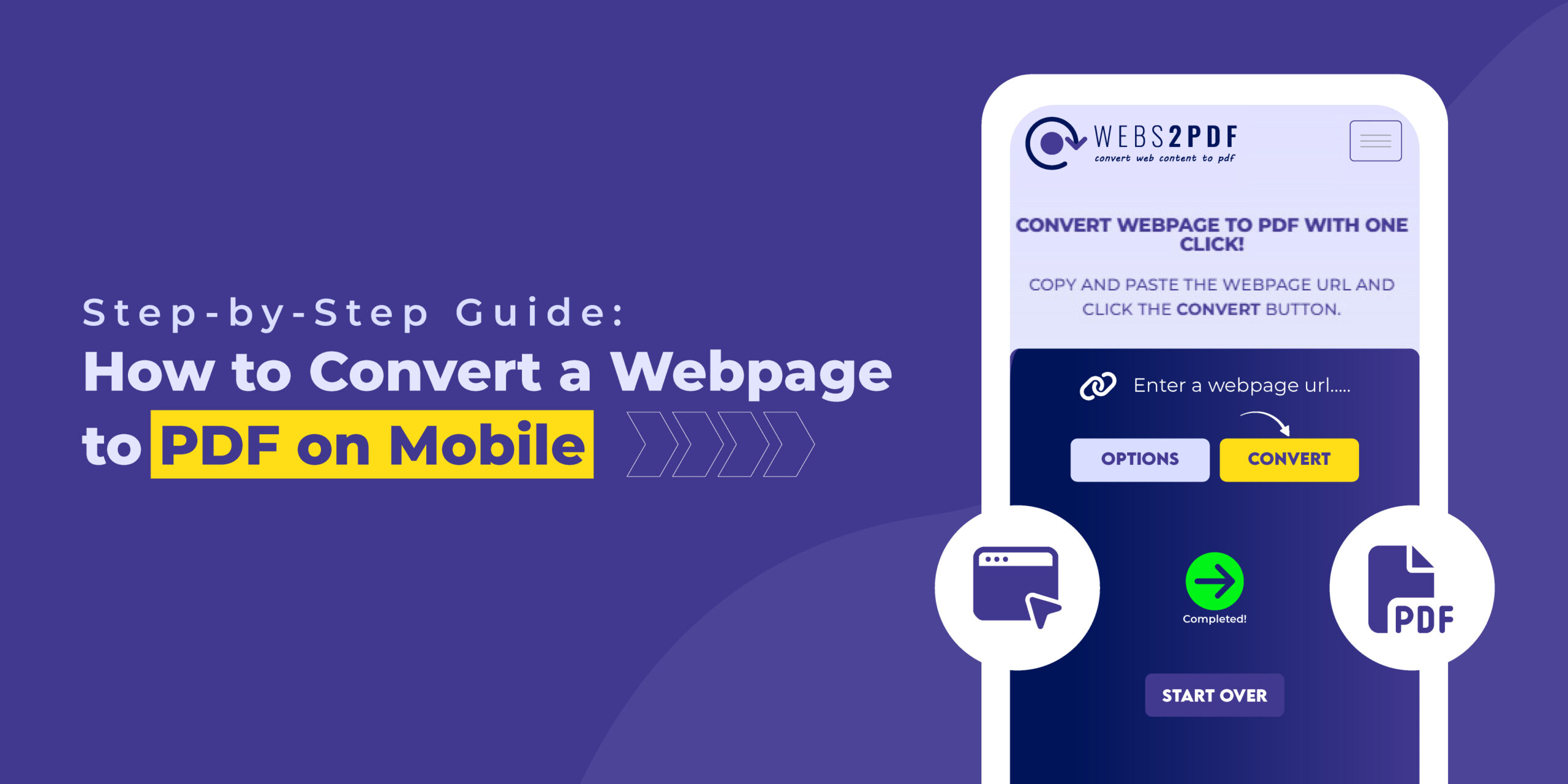
Step-by-Step Guide: How to Convert a Webpage to PDF on Mobile (Android & iPhone)

How to Convert a Webpage to PDF on Mobile

More than 70% of internet users browse on mobile devices, and often we come across useful articles, invoices, tickets, or research pages that we want to save permanently. The problem? Bookmarks don’t always help, and screenshots can be messy.

The most reliable solution is to convert a webpage into a PDF directly on your mobile. A PDF keeps the full content, formatting, and images intact, and it can be accessed offline anytime.

In this guide, you’ll learn:

  • Why saving webpages as PDFs on mobile is useful
  • Built-in methods for Android and iPhone (iOS)
  • How to use Webs2PDF for the easiest conversion
  • Pro tips to manage and organize PDFs on your phone

Why Save Webpages as PDFs on Mobile?

Whether you’re a student, professional, or casual user, saving webpages on your phone as PDFs has several benefits:

  • Offline Access: Read articles and documents later, even without internet.
  • Permanent Record: Webpages can change or get deleted, but your PDF remains.
  • Easy Sharing: Send PDFs via WhatsApp, email, or cloud storage.
  • Better than Screenshots: Instead of 10+ screenshots, one PDF keeps everything in order.
  • Cross-Device Compatibility: Move PDFs from phone to laptop or tablet easily.

Method 1: Save a Webpage as PDF on Android

Most Android phones (especially with Chrome or built-in browsers) already have a Save as PDF option.

Steps (Using Chrome on Android):

  1. Open Chrome Browser on your Android phone.
  2. Navigate to the webpage you want to save.
  3. Tap the three-dot menu (⋮) at the top-right corner.
  4. Select Share → then choose Print.
  5. From the printer options, select Save as PDF.
  6. Tap the Download/Save button to store the file.

Your webpage is now saved as a PDF in your Downloads folder.

Limitations:

  • Doesn’t always preserve full formatting.
  • No control over page size/quality.
  • Some interactive pages may not save properly.

Method 2: Save a Webpage as PDF on iPhone (iOS)

Apple makes it quite simple to save webpages as PDFs using Safari.

Steps (Using Safari on iPhone):

  1. Open Safari and go to the desired webpage.
  2. Tap the Share button (square with arrow) at the bottom.
  3. Scroll down and select Print.
  4. In the Print Preview, pinch outwards with two fingers (zoom gesture).
  5. Tap the Share icon again.
  6. Choose Save to Files or send via Mail/WhatsApp.

Your webpage is saved as a PDF in your chosen location.

Limitations:

  • Multi-page websites can be difficult to save properly.
  • No advanced settings for layout or orientation.

Method 3: Use Webs2PDF for Easy Mobile Conversion

While built-in methods work, they have limitations (formatting issues, no custom settings, complicated steps).

Webs2PDF makes the process simpler, faster, and more accurate. It works directly from your mobile browser, no apps needed.

Steps to Save Webpage as PDF with Webs2PDF:

  1. Open Webs2PDF.com in your mobile browser.
  2. Copy the link of the webpage you want to save.
  3. Paste the link into the Webs2PDF box.
  4. Select your preferences (Desktop/Mobile view, page size, quality).
  5. Tap Convert → Download your PDF instantly.

The PDF maintains proper formatting, works across devices, and is ready for offline use.

Why Webs2PDF is better for mobile:

  • Works on both Android & iPhone.
  • Preserves original layout & images.
  • Customizable (page size, orientation, quality).
  • Free plan available, no login required.
  • Super fast conversion.

Pro Tips for Managing PDFs on Mobile

Once you’ve saved webpages as PDFs, here’s how to keep them organized:

  • Create Folders: e.g., “Study Notes,” “Invoices,” “Work Articles.”
  • Rename Files Clearly: Instead of document123.pdf, use History_Assignment_Jan2025.pdf.
  • Use PDF Reader Apps: Apps like Adobe Acrobat or Xodo allow highlighting and annotations.
  • Cloud Backup: Store important PDFs in Google Drive, iCloud, or Dropbox for access across devices.
  • Printing Option: Saved PDFs can be printed anytime for physical notes.

Real-Life Use Cases

  • Students: Save online study materials, assignments, and research papers to read offline.
  • Teachers: Save and distribute lesson plans/articles as PDFs to students.
  • Professionals: Save invoices, reports, and business articles directly from mobile.
  • Travelers: Save flight tickets, hotel bookings, and guides as offline PDFs.

Why Choose Webs2PDF for Mobile Users?

Compared to built-in options, Webs2PDF offers:

  • Better formatting accuracy
  • Mobile-friendly interface
  • Advanced options (page size, orientation, quality)
  • Works on any device without installation
  • Free usage + affordable premium options

This makes Webs2PDF the best choice for mobile users who need reliability and simplicity.

Conclusion

Converting webpages to PDFs on mobile is not just convenient, it’s essential for study, work, and daily life. While Android and iPhone have built-in methods, they come with limitations.

For the fastest and most accurate results, Webs2PDF is the go-to solution. It works on any device, maintains proper formatting, and makes offline access easier than ever.

Try it today: Webs2PDF.com

  • September 16, 2025

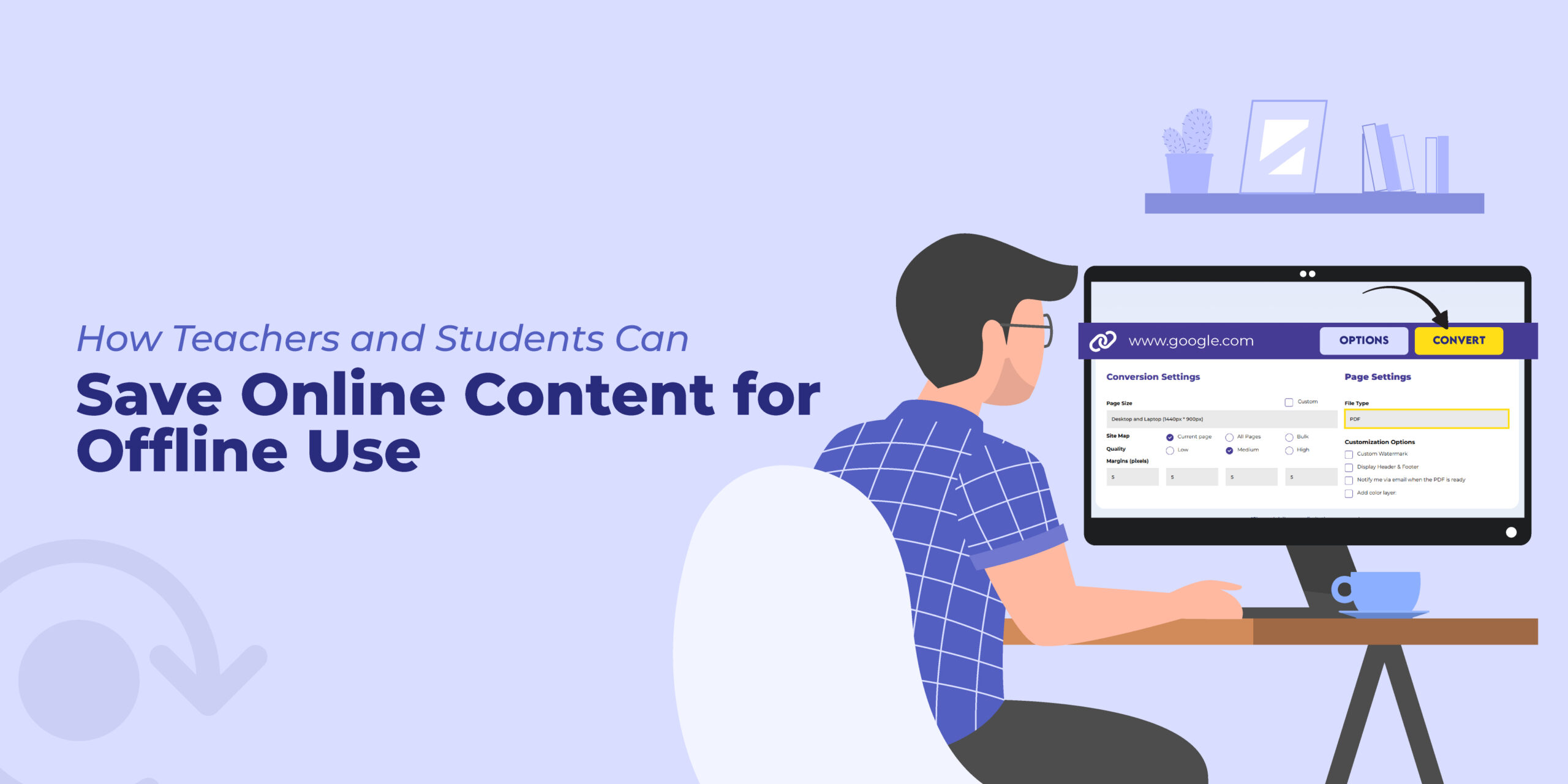
How Teachers and Students Can Save Online Content for Offline Use

Teachers and Students Can Save Online Content for Offline Use

The way we learn and teach has changed dramatically in recent years. From online lectures to digital classrooms, more and more educational resources are available online. But here’s the challenge: Internet access is not always reliable. Many students struggle with poor connectivity, and teachers often need offline access to lesson materials.

That’s where saving online content as PDFs becomes a game-changer. By converting webpages, articles, or study materials into PDF files, teachers and students can access them anytime, without needing an internet connection.

In this blog, we’ll cover:

  • Why saving online content as PDFs is essential in education
  • Practical use cases for teachers and students
  • Step-by-step guide to saving online content with Webs2PDF
  • Tips for organizing and managing saved PDFs
  • Best practices for teachers and students

Why Save Online Content for Offline Use?

Here are some of the biggest reasons why PDFs are the best way to store online information for teachers and students:

1. Offline Access Anytime, Anywhere

Once a webpage is saved as a PDF, you don’t need internet access to open it. Students can study during commutes, and teachers can prepare lessons even in low-connectivity areas.

2. Preserves the Original Layout

Unlike copy-pasting into Word or Notes, PDFs maintain the webpage’s design, images, and formatting exactly as it was online.

3. Reliable Archiving for Research

Educational content often disappears or gets updated. A saved PDF ensures you always have the original version for reference.

4. Easy Sharing & Printing

Teachers can distribute lesson plans, articles, and assignments as PDFs. Students can share notes with classmates or print them out for offline study.

5. Cross-Platform Compatibility

A PDF can be opened on any device, laptops, tablets, or smartphones, without needing special software.

How Teachers Benefit from Saving Online Content

Teachers today rely on more than just textbooks. From online articles and e-learning platforms to video transcripts, the internet is a goldmine of teaching material. Here’s how teachers can use Webs2PDF:

  • Lesson Planning: Save online articles, blog posts, and academic papers for classroom discussions.
  • Resource Distribution: Convert webpages into PDFs and share with students via Google Classroom, WhatsApp, or email.
  • Backup Materials: Keep an offline archive of teaching aids in case the original website changes or disappears.
  • Printed Handouts: PDFs make it easy to create printable lesson notes.

Example: A science teacher finds an interactive article about climate change. Instead of just sharing the link (which students may not open), they convert it into a PDF with Webs2PDF and share it as part of the weekly reading assignment.

How Students Benefit from Saving Online Content

For students, online research is part of daily life, assignments, projects, and self-study all depend on digital content. But constant internet access isn’t always possible.

Here’s how students can benefit:

  • Offline Study Notes: Convert Wikipedia articles, research papers, and study guides into PDFs for offline access.
  • Organized Research: Save and categorize PDFs by subject or topic.
  • Exam Preparation: Compile notes, solved examples, and reference articles into one PDF folder.
  • Group Projects: Share saved webpages with classmates for collaboration.

Example: A university student working on a history thesis can save dozens of webpages as PDFs. Even if websites go offline later, the student still has all the references safely stored.

Step-by-Step Guide: How to Save Online Content with Webs2PDF

Saving webpages using Webs2PDF is simple and doesn’t require installation or registration.

Step 1: Visit Webs2PDF.com

Open your browser and go to the Webs2PDF homepage.

Step 2: Copy the URL of the Webpage

Find the article, blog post, or online content you want to save. Copy the URL from your browser.

Step 3: Paste the URL

Paste the link into the conversion box on Webs2PDF.

Step 4: Choose Settings (Optional)

  • Select Desktop, Mobile, or Tablet view.
  • Adjust page size, orientation, or quality.

Step 5: Convert & Download

Click Convert and download the PDF to your device.

That’s it, your webpage is now saved for offline use.

Tips for Organizing Saved PDFs (For Students & Teachers)

Saving is just the first step. To make offline PDFs truly useful, they should be well-organized.

  • 📁 Create Subject Folders: e.g., “Math PDFs,” “History PDFs,” “Teaching Resources.”
  • 🗂️ Use Date/Topic Naming: Instead of random file names, rename PDFs like Climate_Change_Lesson_Jan2025.pdf.
  • 📑 Use PDF Tools: Combine multiple webpages into one document for easy revision.
  • 🔍 Highlight & Annotate: Use PDF readers to mark important points.

Classroom & Study Use Cases

  1. Teachers preparing lessons: Collect articles on a topic, save them as PDFs, and create a reading pack.
  2. Students researching assignments: Save multiple sources for a project and cite them later.
  3. Exam revision: Convert practice tests and study guides into offline PDFs.
  4. Remote learning: Share PDF handouts with students in areas with weak internet.

Why Webs2PDF is the Best Tool for Education

Many tools exist for webpage-to-PDF conversion, but Webs2PDF is ideal for teachers and students because:

  • Free plan available (perfect for schools/students on a budget).
  • Works on desktop & mobile (no extra app needed).
  • Maintains high-quality formatting for accurate study material.
  • Advanced options for customization (page size, orientation).
  • Privacy-first: your content is not tracked or misused.

Unlike some tools that restrict free usage, Webs2PDF gives educators and learners a dependable, easy-to-use solution.

Best Practices for Teachers & Students

  • Check Formatting: After conversion, ensure the PDF layout matches the original webpage.
  • Save Early: Don’t wait until the last moment; websites can change or disappear.
  • Organize: Keep your saved PDFs well-labeled and categorized.
  • Share Wisely: Use cloud platforms like Google Drive or OneDrive for easy distribution.
  • Update Regularly: Re-save important materials if they get updated online.

Final Thoughts

Education is moving rapidly into the digital era, but offline access still matters. With tools like Webs2PDF, teachers and students can:

  • Build reliable offline archives,
  • Access learning resources without the internet, and
  • Improve study and teaching efficiency.

Next time you find a useful article or resource, don’t just bookmark it, convert it into a PDF with Webs2PDF and make sure you’ll have access forever.

  • September 9, 2025

Top 10 Free Online Tools to Convert Webpages into PDFs (Compared – 2025 Guide)

Top 10 Free Online Tools to Convert Webpages into PDFs

The internet is full of useful information, but websites change, update, or sometimes disappear. If you want to save a webpage permanently, the most reliable way is to convert it into a PDF. Whether you are a student conducting research, a teacher preparing lesson plans, a professional managing invoices, or simply someone who wants offline access to content, a reliable webpage-to-PDF converter is essential.

But here’s the challenge: there are dozens of free tools out there. Which one should you choose? Some are fast but lack features, some maintain design but are paid-only, and others are complicated to use.

To make your decision easier, we tested and compared the top 10 free tools to convert webpages into PDFs in 2025. This in-depth guide covers their features, pros & cons, and best use cases, so you can pick the one that fits your needs.

What Makes a Good Web to PDF Converter?

Before diving into the list, let’s quickly understand what really matters when choosing a converter:

  1. Ease of Use: Can anyone use it without downloading software or going through multiple steps?
  2. Accuracy: Does the converter maintain the original layout, images, and formatting?
  3. Speed: How quickly can it generate the PDF?
  4. Privacy & Security: Does it ensure your URLs and data remain private?
  5. Advanced Options: Can you customize page size, orientation, or PDF quality?
  6. Free vs Paid Limits: Is the free plan actually usable, or is it just a teaser for the paid version?

Quick Comparison of Top 10 Tools

Tool Free Plan Ease of Use Accuracy Advanced Features Best For
Webs2PDF ✔️ Yes ⭐⭐⭐⭐⭐ ⭐⭐⭐⭐⭐ Page size, quality, format Students & professionals
PDFcrowd ✔️ Limited ⭐⭐⭐ ⭐⭐⭐⭐ API for developers Developers
HTML to PDF ✔️ Yes ⭐⭐⭐⭐ ⭐⭐⭐⭐ Batch/API support Businesses
SmallPDF ✔️ Limited ⭐⭐⭐⭐ ⭐⭐⭐⭐ Edit, merge, compress Casual users
Sejda PDF ✔️ Limited ⭐⭐⭐ ⭐⭐⭐ PDF editing toolkit Advanced users
iLovePDF ✔️ Yes ⭐⭐⭐ ⭐⭐⭐⭐ Multi-file conversion Office users
SodaPDF ✔️ Yes ⭐⭐⭐ ⭐⭐⭐ Online + desktop app Mixed use
PDFMyURL ✔️ Trial ⭐⭐⭐ ⭐⭐⭐⭐ Batch archiving Researchers
PDFConvertFree ✔️ Yes ⭐⭐⭐ ⭐⭐⭐ Basic conversion Quick tasks
PDF24 Tools ✔️ Yes ⭐⭐⭐⭐ ⭐⭐⭐⭐ Extra PDF utilities General users

Best Free Tools to Convert Webpages into PDFs

1. Webs2PDF (Best Overall Choice)

https://webs2pdf.com

When it comes to simplicity, accuracy, and privacy, Webs2PDF is a standout. Unlike many free tools, it doesn’t overload you with ads or push you into buying a premium plan right away.

Features:

  • Convert webpages to PDFs instantly (just paste the link).
  • Choose between desktop, mobile, or tablet views.
  • Control page size, PDF quality, and orientation.
  • Privacy-first: no hidden tracking, no unnecessary redirects.
  • Free plan + affordable paid plans for advanced needs.

Pros:

  • Clean and user-friendly interface.
  • Preserves webpage formatting almost perfectly.
  • Works on any device (desktop & mobile).
  • No sign-up required for free usage.

Cons:

  • Daily limits on free conversions (reasonable for casual use).

Best For: Students, teachers, freelancers, professionals, anyone who wants a reliable everyday tool.

2. PDFcrowd

PDFcrowd is popular among developers because of its API support. You can integrate webpage-to-PDF functionality directly into apps or websites.

Features:

  • Web interface + API.
  • Supports both HTML files and live webpages.
  • Works with advanced integrations (ideal for custom workflows).

Pros:

  • Great for businesses and devs.
  • High accuracy in converting simple webpages.

Cons:

  • The free version is very limited (watermarks on PDFs).
  • Best features are locked behind a paid plan.

Best For: Developers and businesses needing automated PDF workflows.

3. HTML to PDF

Another tool that focuses on batch conversion and business use. Great for teams who regularly save reports or client documents.

Features:

  • Convert webpages in bulk.
  • API available for custom use.
  • Handles complex HTML/CSS well.

Pros:

  • Reliable for enterprise-level needs.
  • Good support for modern layouts.

Cons:

  • Not as user-friendly for casual users.
  • The free plan has restrictions.

Best For: Businesses, agencies, research teams.

Why Webs2PDF is the Best Pick

Out of all the tools, Webs2PDF strikes the right balance between free usability, advanced features, and accuracy. Unlike SmallPDF or Sejda, it doesn’t force heavy restrictions. Unlike PDFConvertFree, it maintains proper formatting. And unlike PDFcrowd, it’s not just for developers.

  • The free plan is actually usable.
  • Privacy-first approach.
  • Supports mobile & desktop perfectly.
  • Great for students, teachers, researchers, and professionals alike.

Final Thoughts

Converting webpages to PDFs is more than just convenience; it’s about preserving knowledge, keeping records, and working smarter offline.

If you’re looking for a one-stop, reliable solution, Webs2PDF is the clear winner. But depending on your needs, you can try other tools too:

  • Researchers → PDFMyURL
  • Businesses/Teams → HTML to PDF
  • Occasional Users → SmallPDF or iLovePDF
  • Everyday Users → Webs2PDF

Start converting today for free: Webs2PDF.com

  • August 28, 2025

How to Save Any Webpage as a PDF in Chrome Browser with Webs2PDF

Save Any Webpage as a PDF in Chrome Browser

Have you ever needed to save a webpage as a PDF in Chrome? Whether for research, documentation, or offline reading, converting a web page to a PDF is a common need. While your browser has a built-in feature, it often produces messy, unprofessional results.

This guide will show you a far superior method using Webs2PDF, the most efficient online tool to convert a webpage to PDF in Chrome. Forget complicated menus and poorly formatted files, Webs2PDF makes the process seamless, fast, and professional.

Why Choose Webs2PDF Over Other Methods?

When you save a webpage as a PDF in Chrome, you want the result to be clean and accurate. Webs2PDF stands out for several reasons:

  • No Clutter: Unlike the native Chrome Print function, Webs2PDF removes ads, navigation menus, and pop-ups, giving you a clean, readable PDF.
  • Superior Quality: Webs2PDF accurately preserves the original layout, formatting, CSS styles, and images. The PDF you get is a perfect replica of the webpage.
  • Full-Page Capture: It captures the entire webpage, even the parts you have to scroll down to see, unlike simple screenshot extensions.
  • Customization: You get full control over the final output, including page size, quality, and margins, options that are not available in a standard Chrome print to PDF function.
  • No Installation Required: As a web-based tool, Webs2PDF requires no webpage to pdf chrome extension installation. It works directly in your Chrome browser on any device.

A Simple Step-by-Step Guide to Using Webs2PDF in Chrome

Follow these easy steps to convert a webpage to PDF in Chrome in a matter of seconds.

Step 1: Go to Webs2PDF

Open a new tab in your Chrome browser and visit the Webs2PDF website. You’ll find a clean, simple interface where you can begin.

Step 2: Copy and Paste the Webpage URL

Navigate to the webpage you want to save. Copy the full URL from the address bar and paste it into the input field on the Webs2PDF site. This is all it takes to start the process to save a chrome page as pdf.

Step 3: Customize Your PDF Settings (Optional)

Before converting, click the “Options” button to adjust your preferences. This step is what separates a basic PDF from a professional one. You can:

  • Adjust Page Size: Select a specific screen size like Desktop or iPad for optimal viewing.
  • Set Quality: Choose High quality for clear images and crisp text.
  • Define Margins: Set your desired margins in pixels to control the layout.

Step 4: Convert and Download Your PDF

Once your settings are ready, click the “Convert” button. Webs2PDF will process the page, and a download link for your high-quality PDF will appear. Click on it to download webpage as pdf chrome.

You have now successfully created a professional PDF from a webpage in your Chrome browser without any clutter or formatting issues.

FAQs about Webs2PDF and Chrome

Is Webs2PDF a chrome extension?

No, Webs2PDF is an online tool. It works directly in your Chrome browser, so you don’t need to install any extensions that might slow down your browser.

How does Webs2PDF compare to Chrome Print to pdf?

Webs2PDF offers superior control over the output, removing ads and giving you customization options for page size, quality, and margins, which the standard Chrome print function cannot do.

Can I use Webs2PDF on my phone or tablet?

Yes. Webs2PDF is a web-based tool, so it works perfectly in the Chrome browser on your iPhone, iPad, or Android device. The process to save webpage as pdf on Mac Chrome is the same as on Windows.

The Best Way to Convert Web Pages in Chrome

While the Chrome browser has a built-in feature to print a web page to pdf, it’s a basic option with limited results. For a professional, clean, and high-quality PDF, Webs2PDF is the clear winner. It’s the only tool you need to confidently convert webpage into PDF chrome without compromising on quality or ease of use.

Stop settling for messy PDFs and start using the smarter, faster way to save your online content with Webs2PDF.

  • August 19, 2025

How to Convert a Webpage to a PDF to Share with Students

Convert a Webpage to a PDF to Share with Students

In the modern digital learning environment, saving online content for offline access, research, or documentation is crucial for both students and educators. The most effective way to preserve an article, a research paper, or any online resource is by converting it to a PDF. This guide will provide a detailed, step-by-step walkthrough on how to turn a webpage into a PDF using the best online tool for the job: Webs2PDF.

Why Use Webs2PDF to Convert a Webpage to PDF?

Webs2PDF is designed to be the most reliable and user-friendly solution for educators and learners. It offers a clean, professional, and customizable output that is perfect for academic use.

Offline Accessibility: Students can download a webpage as a PDF to access critical class material without an internet connection.

Easy Archiving: Educators can save webpage as PDF to create a permanent archive of online resources, ensuring content is always available.

Organized Research: You can create a PDF from a webpage to organize research articles and sources for projects in a single, shareable format.

Professional Output: The PDFs generated are free of ads and clutter, making them perfect for reading and annotation.

A Step-by-Step Guide to Converting a Webpage with Webs2PDF

Using Webs2PDF is straightforward and requires no technical expertise. Simply follow these steps to export a webpage to a PDF with ease.

Step 1: Go to Webs2PDF

Open your browser and navigate to the Webs2PDF website. You’ll immediately see a clean interface where you can begin your conversion without any signup or installation.

Step 2: Paste the Webpage URL

Copy the URL of the article or web page you want to convert. Paste this link into the designated input field on the Webs2PDF homepage. This is the first step to turn a webpage into a PDF.

Step 3: Customize Your Conversion Settings

Click on the “Options” button to tailor the PDF to your exact needs. This is where Webs2PDF provides superior control over the output. You can:

Adjust Page Size: Select from various pre-defined sizes like `Desktop and Laptop` or `iPad Portrait` to ensure the PDF is optimized for your device. This is especially useful for students who save a webpage as a PDF on iPad or other tablets.

Set Site Map: If you are a teacher creating a resource, you can choose to convert just the `Current page only` or all related pages.

Choose Quality: Select `Medium` or `High` quality to ensure images and charts are clear and sharp.

Define Margins: Set custom margins in pixels to ensure the content is perfectly spaced and nothing is cut off.

Add Custom Features (Paid Plans): For professional documentation, you can add a `Custom Watermark` or display `Header & Footer` information.

Step 4: Convert and Download Your PDF

Once your settings are configured, click the “Convert” button. Webs2PDF will quickly process the webpage and generate a high-quality PDF file. After the conversion is complete, click the “Download” button to save the webpage as a PDF directly to your computer or mobile device.

The Webs2PDF Advantage: Why It’s the Best Choice for Students & Educators

When you convert a webpage to a PDF, the final result matters. Unlike other methods that can produce messy, ad-filled PDFs, Webs2PDF delivers a clean, professional, and well-formatted document every time. Its user-friendly interface makes it the go-to tool for anyone who needs to turn a website into a PDF without any hassle.

Whether you’re trying to download an article as a PDF for a school project or an educator creating resources, Webs2PDF is the fastest, easiest, and most reliable way to make a webpage into a PDF.

  • August 19, 2025

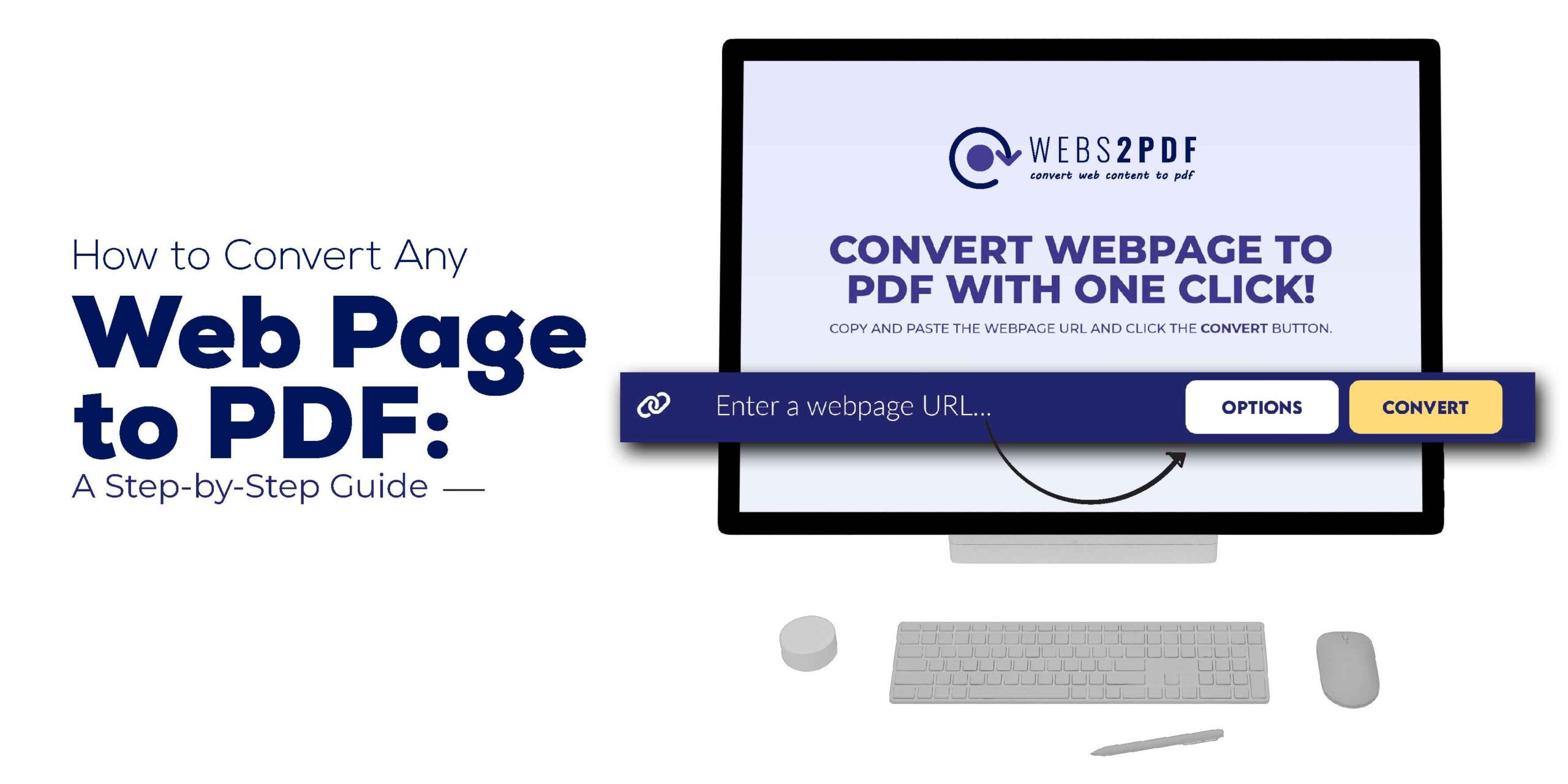
How to Convert Any Web Page to PDF: A Step-by-Step Guide

How to Convert Any Web Page to PDF

Converting web pages to PDF has become an essential task for many. Whether you’re a student saving research articles, a professional creating documentation, or a business owner archiving invoices, the PDF format is the best choice. In this guide, we’ll give you a step-by-step walkthrough of how to convert any web page into a professional PDF. We’ll be using the easiest and most effective online tool, Webs2PDF.

Why Convert a Web Page to PDF?

There are several key benefits to converting web pages to PDF:

  • Offline Access: The PDF format allows you to view content anytime, anywhere, without an internet connection.
  • Easy Sharing: PDFs have a fixed layout, so you can easily share them across any device without losing formatting.
  • Archiving & Documentation: It’s the best way to save important web content for future reference and record-keeping.
  • Print-Ready: Converted PDFs are perfect for professional printing, preserving the design and layout perfectly.

Method 1: Using an Online Converter (Webs2PDF)

Online converters like Webs2PDF are the easiest and fastest way to convert web pages to PDF. You don’t need to download or install any software.

Step 1: Open Webs2PDF

First, open the Webs2PDF website in your browser. You will find a clean, user-friendly interface with an input box for the URL.

Step 2: Enter the Web Page URL

Copy the URL (link) of the web page you want to convert and paste it into the input box on the Webs2PDF homepage.

  • Example: https://www.examplewebsite.com/your-article

Step 3: Customize Your Conversion Settings

After entering the URL, click the “Options” button to customize your settings based on your needs. According to your image, here are the options available:

  • Page Size: You can select a predefined size like Desktop and Laptop, iPad Portrait, or enter a Custom size.
  • Site Map: Choose whether you want to convert the Current page only, All Pages, or do a Bulk conversion (for multiple pages).
  • Quality: Select from Low, Medium, or High quality. This is useful if you need high-resolution images in your PDF.
  • Margins: You can set the margins in pixels for all four sides of the PDF, just like the 5 pixels set in your image.
  • File Type: Choose between PDF, PNG, or JPEG file types (available in paid plans).
  • Customization Options: In paid plans, you can add a Custom Watermark, Display Header & Footer, and receive an email notification when your PDF is ready.

Step 4: Convert and Download

Once you’ve selected your settings, click the “Convert” button. Webs2PDF will process your web page and generate a PDF file in just a few seconds. After the process is complete, a “Download PDF” button will appear. Click it to download your file.

Method 2: Using Your Browser’s Built-in Function

If you just need a simple, quick PDF and don’t need any customization, you can use your browser’s built-in “Print to PDF” option.

Step 1: Open the Web Page

First, open the web page you want to convert to PDF.

Step 2: Open the Print Dialog Box

  • Windows / Linux: Press Ctrl + P.
  • Mac: Press Cmd + P.

Step 3: Save as PDF

  • In the “Destination” or “Printer” drop-down menu, select the “Save as PDF” option.
  • Click the “Save” button.

Note: This method is simple, but it will often include ads, pop-ups, and other unnecessary elements from the web page. Additionally, it doesn’t give you advanced customization options like those offered by Webs2PDF. For professional and clean results, a dedicated tool is far better.

Why Webs2PDF is the Best Choice

While your browser is fine for basic conversions, a dedicated online tool like Webs2PDF provides a superior experience. It not only gives you a clean, professional PDF with one click but also offers far more control over the final output. For fast, easy, and high-quality conversions, Webs2PDF is the best option available.

  • August 11, 2025

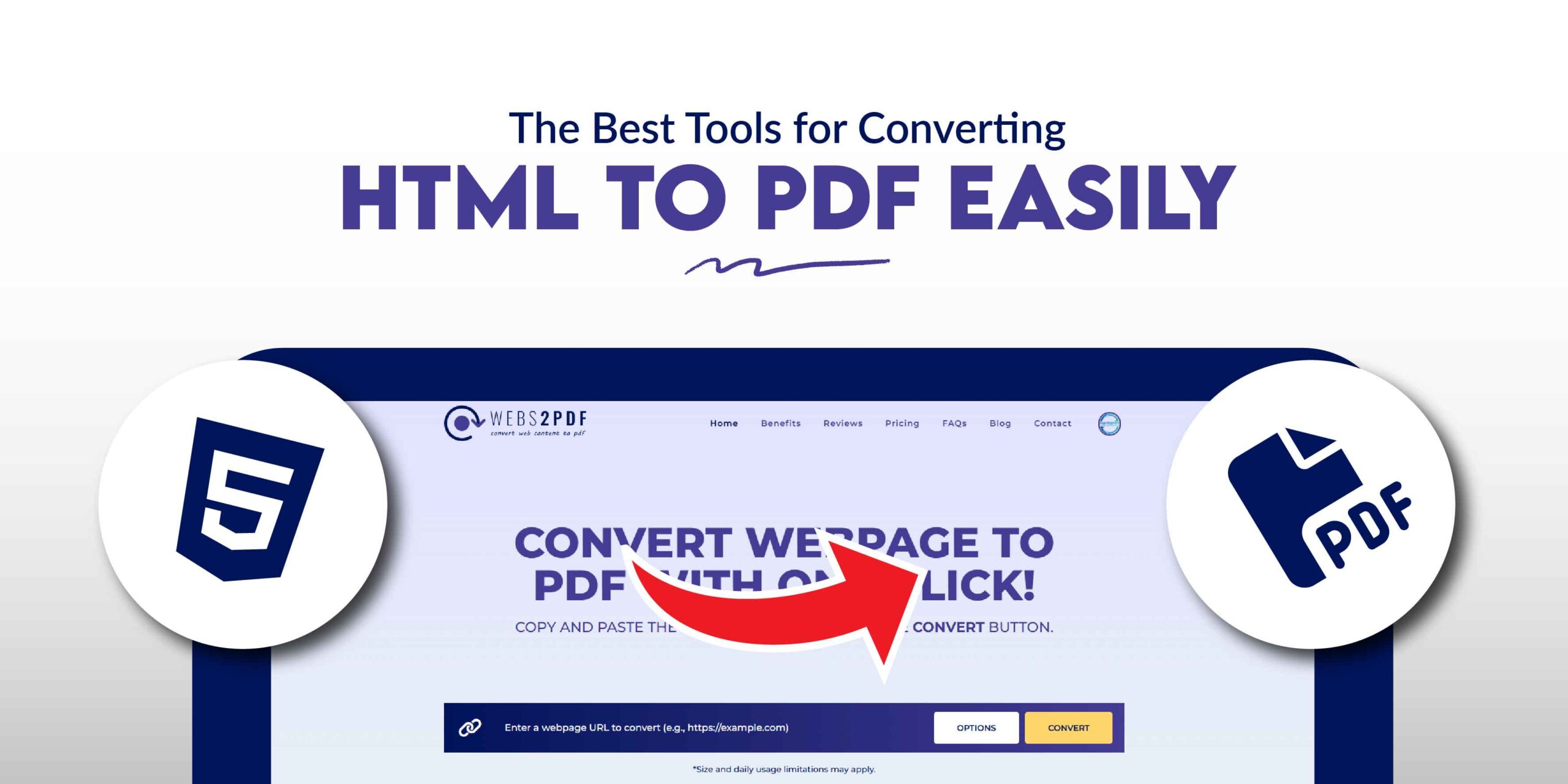
The Best Tools for Converting HTML to PDF

Best HTML to PDF Converters | Webs2PDF Top Choice

Converting HTML files to PDF is a critical task for developers, designers, and marketers who need to preserve web content for archiving, sharing, or professional documentation. While many tools are available, choosing the right one ensures accuracy and efficiency. This guide will explore the top HTML to PDF converters, with a special focus on why Webs2PDF is the best all-around choice.

Why Is HTML to PDF Conversion So Important?

  • Preserve Layout and Styling: PDFs maintain design integrity, ensuring content looks the same on every device.
  • Universal Accessibility: PDFs are universally accessible on any operating system, making sharing simple.
  • Offline Access: View content anytime, anywhere, without an internet connection.
  • Professional Reporting: Ideal for creating professional invoices, reports, and dashboards.
  • Compliance & Archiving: Store legal and historical records in a universally reliable format.

Webs2PDF: The Easiest & Most Powerful HTML to PDF Converter

Webs2PDF stands out as the best solution for anyone, from non-technical users to developers, who needs a quick, reliable, and secure way to convert HTML to PDF. Unlike complex command-line tools or expensive APIs, Webs2PDF offers a user-friendly online platform with powerful features.

Key Features of Webs2PDF:

  • One-Click Conversion: Instantly convert any live URL or HTML page to a high-quality PDF.
  • Customizable Page Sizes: Convert content to look perfect on desktop, tablet, or mobile screens.
  • No Technical Skills Needed: No installations, code, or command-line interfaces are required.
  • Secure & Private: Your data is not stored, ensuring complete privacy.
  • Advanced Options (in Paid Plans): Get more control with custom headers, footers, watermarks, and more.

Webs2PDF vs. Other Popular HTML to PDF Converters

While other tools have their place, Webs2PDF’s combination of ease of use and professional features makes it the top choice for most users.

Feature Webs2PDF PDFCrowd WeasyPrint wkhtmltopdf
Ease of Use Online, one-click Online/API Developer (Python) Developer (CLI)
Target Audience Everyone Developers/Businesses Developers Developers/Technical
Customization High (Paid Plans) High (API) High (Code) High (CLI)
Layout Support Modern CSS Good Excellent Good
Cost Free Plan Available Freemium/Paid Free (Open-Source) Free (Open-Source)

A Brief Overview of the Competition

  1. PDFCrowd: This tool is a strong contender for developers, offering a robust API for automation. While it also has an online converter, its primary strength lies in its backend integration. It’s best for users who need to automate PDF generation on a large scale.
  2. WeasyPrint: A free, open-source Python library, WeasyPrint is an excellent choice for developers who need to integrate HTML to PDF conversion directly into their Python applications. It provides precise control over the output but requires coding skills.
  3. wkhtmltopdf: A popular open-source command-line tool, wkhtmltopdf is perfect for technical users who need a free, scriptable solution for batch processing. It’s a powerful option for server-side rendering but is not user-friendly for non-technical individuals.
  4. Prince: This is a professional-grade solution used for high-end publishing. It offers exceptional quality for complex layouts but is often too expensive and complex for most everyday users and small businesses.

Use Cases for HTML to PDF Conversion

  • eCommerce Receipts and Invoices
    Automatically generate printable receipts for customer orders.
  • Business Reports and Dashboards
    Convert real-time dashboards into shareable PDF reports.
  • Legal and Compliance Documentation
    Generate contract-ready PDFs from web-based forms.
  • Offline Content Delivery
    Allow users to download web pages or catalogs as PDFs.
  • Website Archiving
    Create PDF snapshots of webpages for compliance or record-keeping.

How to Choose the Right Tool for You

  • For Everyday Users: If you just need a simple, fast, and reliable way to convert an HTML page, Webs2PDF is the best choice. No technical knowledge is required.
  • For Developers: If you’re building an application and need to automate PDF generation, consider an API like PDFCrowd or open-source libraries like WeasyPrint and wkhtmltopdf. However, for a simple and reliable solution that requires minimal setup, even for developers, Webs2PDF is a great option.

Final Verdict

Whether you need a quick online converter for a single task or a scalable solution for a business, Webs2PDF provides the perfect balance of ease, power, and security. Its intuitive interface and reliable performance make it the most efficient choice for converting HTML to PDF without any hassle.

For a dependable, user-friendly, and feature-rich HTML to PDF converter, your search ends here. Choose Webs2PDF.

  • July 22, 2025

Top 5 Free Webpage to PDF Converters Online

Webpage to PDF Converters Online

Need to save online content for offline use, documentation, or easy sharing? This guide covers the top 5 free online tools for converting any webpage into a professional PDF. While we’ll briefly mention the competition, we’ll clearly show you why Webs2PDF is the most powerful and reliable choice for all your conversion needs.

Why You Need to Convert Webpages to PDF

Before we dive into the tools, here’s why people prefer converting webpages to PDFs:

  • Offline Access: Read content anytime, anywhere, without an internet connection.
  • Easy Sharing: PDFs maintain formatting and can be shared across all devices without any layout issues.
  • Archiving: Save webpages for documentation and future reference.
  • Professional Printing: PDFs preserve the design, making them perfect for professional printing.

Research: Compile articles and references into an organized format for academic or professional use.

Webs2PDF: The #1 Choice for Speed, Simplicity, and Features

Webs2PDF is designed for professionals, students, and businesses who need a fast, secure, and feature-rich conversion tool. It stands out by combining the user-friendliness of a one-click converter with powerful, advanced options.

Key Features That Make Webs2PDF the Best:

  • One-Click Conversion: Instantly convert any URL to a high-quality PDF.
  • Customizable Page Sizes: Choose from multiple sizes optimized for desktop, tablet, and mobile devices.
  • Secure & Private: Your data is not stored, ensuring complete privacy.

Advanced Features (in Paid Plans): Gain access to full website conversion, bulk conversions, custom watermarks, and header/footer options.

A Quick Comparison: Webs2PDF vs. Other Tools

While other tools can get the job done, they often lack the features, flexibility, and security that Webs2PDF provides. Here’s how they stack up.

Feature Webs2PDF Print Friendly PDF Crowd UPDF
Simplicity One-click conversion Requires editing Requires some setup One-click conversion
Custom Page Sizes Yes (Multiple options) No No No
Full Website Conversion Yes (Paid Plans) No Yes (Paid) No
Advanced Features Bulk, watermark, header/footer Removes clutter only API integration Basic conversion
Security Private and secure Not specified Not specified Not specified

Brief Look at the Competition

  1. Print Friendly: This tool is great if your main goal is to create a clutter-free PDF by removing ads and pop-ups. It’s best for a clean reading experience, but it lacks advanced features.
  2. PDFCrowd: Ideal for developers and businesses, PDFCrowd’s main strength is its API integration, which allows for automation. It’s a solid choice for technical users but less intuitive for quick, simple conversions.
  3. UPDF: A simple tool for instant URL-to-PDF conversions. It’s a good free option for very basic needs, but it doesn’t offer the customization and advanced functionality found in Webs2PDF.

Final Thoughts: Choose the Best Tool for Your Workflow

When choosing a webpage to PDF converter, you need to consider more than just a free price tag. You need a tool that is fast, reliable, and secure, with the flexibility to grow with your needs.

Webs2PDF provides the perfect solution, whether you’re using the generous free plan for daily conversions or a paid plan for advanced features like full website conversion. It’s the only tool you’ll need to save, archive, and share web content professionally. So, if you’re looking for a dependable webpage to PDF converter, choose the one that offers the best blend of features and simplicity. Choose Webs2PDF.

Recent Posts
Webpage to PDF Blank Page Issue

Webpage to PDF Blank Page Issue: Causes, Fixes, and Solutions

January 13, 2026
Save Web Pages as High-Quality PDF

Save Web Pages as High-Quality PDF Without Installing Any App

December 30, 2025
Convert Long Web Pages to PDF Without Cropping

Tips to Convert Long Web Pages to PDF Without Cropping or Losing Content (2026 Guide)

December 23, 2025
Convert Dynamic Web Pages to PDF or Image

How to Convert Dynamic Web Pages to PDF or Image (Ultimate 2026 Guide)

December 17, 2025
Webpage to PDF vs Screenshot

Webpage to PDF vs Screenshot: Which Is Better for Archiving Web Pages in 2026?

December 9, 2025
Blog Categories
Website to PDF
Subscribe

Stay Updated with Webs2PDF

Join our newsletter and never miss a tip.

Next Up on Webs2pdf Blog

Creative Uses of Web to PDF
Creative Uses of Web to PDF You Haven’t Thought Of
  • November 18, 2025
How Webs2PDF Protects Your Privacy
Behind the Scenes: How Webs2PDF Protects Your Privacy
  • November 11, 2025
Why Professionals Save Invoices and Reports as PDFs
Why Professionals Save Invoices and Reports as PDFs: A Complete Workflow
  • October 28, 2025
Web to PDF for Teams
Web to PDF for Teams: How Remote Workers Use PDFs for Collaboration
  • October 21, 2025
Convert and Archive News Articles for Research
Convert and Archive News Articles for Research: A Digital Librarian’s Guide
  • October 14, 2025
Webs2PDF vs Other Tools
Webs2PDF vs Other Tools: The Only Converter That Preserves Content & Images Perfectly
  • October 8, 2025
Follow Us
Pinterest-p Reddit-alien Github
  • About
  • Benefits
  • Reviews
  • Pricing
  • FAQ
  • Blog
  • Contact

Copyright © 2026 webs2pdf.com All rights reserved.

  • Privacy Policy
  • Cookie Policy
  • Terms of Use
  • Refund Policy
Webs 2 PDF Logo

Transforming Web Content into Portable, Professional Documents

Tick
  • Home
  • Benefits
  • Reviews
  • Pricing
  • FAQs
  • Blog
  • Contact
  • Home
  • Benefits
  • Reviews
  • Pricing
  • FAQs
  • Blog
  • Contact
SIGN IN